If you’re looking for a reliable evergreen that delivers year-round colour, structure, and privacy, emerald green arborvitae is one of the most popular choices across the UK, USA, Canada, and parts of Australia. Known botanically as Thuja occidentalis ‘Smaragd’, this compact conifer has become a favourite in home improvement and garden design thanks to its elegant columnar shape, rich emerald foliage, and relatively low maintenance requirements.
Homeowners often choose emerald green arborvitae for privacy hedges, boundary planting, and foundation landscaping, especially in smaller gardens where space is limited. Unlike fast-growing evergreens that can become difficult to manage, this variety grows at a steady, controlled pace while still offering excellent screening benefits.
In this guide, you’ll learn what emerald green arborvitae is, how it performs in different climates, how to plant and care for it properly, and how to use it effectively in modern landscapes. Whether you want a neat hedge, a formal garden layout, or a simple evergreen accent, this article will help you make informed decisions.
What Is Emerald Green Arborvitae?
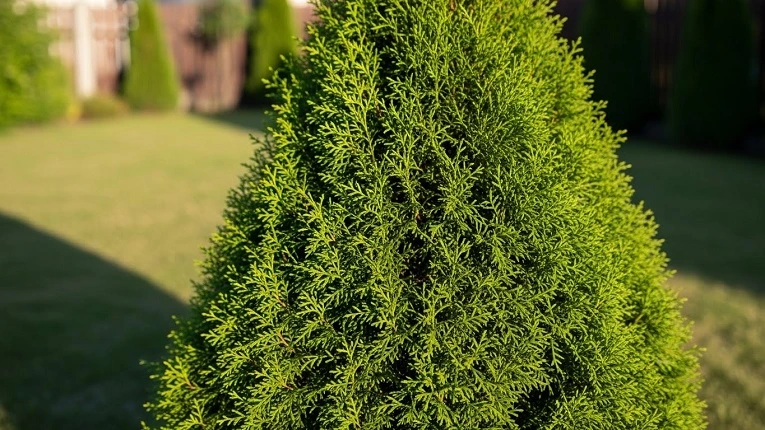
Emerald green arborvitae is a narrow, upright evergreen tree from the cypress family. It is widely valued for its dense foliage, tidy growth habit, and ability to retain its green colour throughout winter.
Botanical Background
Its scientific name is Thuja occidentalis ‘Smaragd’. It is a cultivated variety bred for symmetry and compact form rather than rapid growth.
Why It’s So Popular
Unlike many conifers that spread outward, emerald green arborvitae grows tall but stays slim. This makes it ideal for urban gardens, suburban homes, and narrow property lines. Many landscape designers favour it because it keeps its shape naturally, reducing the need for frequent trimming.
Key Features and Characteristics
Growth Rate and Mature Size
Emerald green arborvitae grows approximately 20–30 cm (8–12 inches) per year. At maturity, it typically reaches 3–5 metres (10–15 feet) in height and about 1 metre (3–4 feet) in width. This slow-to-moderate growth rate makes it easy to maintain over time.
Foliage and Appearance
The foliage consists of soft, flat sprays of scale-like leaves with a vibrant emerald green colour. Unlike some evergreen varieties, it rarely turns bronze in winter, even in colder regions.
Lifespan
With proper care, emerald green arborvitae can thrive for several decades, making it a long-term investment in both privacy and property value.
Ideal Planting Conditions
Sunlight Requirements
For best results, plant emerald green arborvitae in full sun, receiving at least six hours of direct sunlight daily. Light shade is tolerated, but dense growth is best achieved with more sun.
Soil Preferences
This plant prefers well-drained soil and performs best in neutral to slightly acidic conditions. Poor drainage or constantly wet soil can lead to root problems.
Spacing Guidelines
For hedges, space plants 60–90 cm (2–3 feet) apart. For individual specimens, allow enough room for full mature width. Slightly wider spacing improves airflow and reduces disease risk.
Hardiness and Climate Adaptation
Emerald green arborvitae is highly adaptable and performs well in cold climates, including much of the UK, Canada, and northern USA. It tolerates frost, snow, and strong winds when properly established. In warmer regions, including parts of Australia, it prefers milder, temperate climates and consistent watering during hot periods.
How to Plant Emerald Green Arborvitae
Best Time to Plant
Spring and early autumn are ideal planting times. Avoid planting during extreme heat or when the ground is frozen.
Planting Steps
Dig a hole twice as wide as the root ball but no deeper. Position the plant so the root flare sits slightly above ground level. Backfill with native soil, water thoroughly, and apply mulch to retain moisture and regulate soil temperature.
Watering and Irrigation Needs
During the first year, consistent watering is essential. Water deeply once or twice per week, increasing frequency during dry spells. Once established, emerald green arborvitae becomes moderately drought tolerant but still benefits from regular moisture.
Fertilisation and Feeding
Apply a slow-release evergreen fertiliser in early spring. Avoid over-fertilising, as this can cause weak growth. One feeding per year is usually sufficient.
Pruning and Maintenance
Minimal pruning is required. Light trimming in late spring or early summer helps maintain shape. Avoid heavy pruning in late autumn, as it can expose foliage to winter damage. Over-pruning is one of the most common mistakes and should be avoided.
Landscaping Uses
Privacy Screens and Hedges
Emerald green arborvitae is one of the best evergreen privacy screen plants for small to medium gardens due to its narrow width and dense growth.
Foundation and Entryway Planting
Its formal shape makes it ideal for framing entrances, lining pathways, or planting near buildings without overwhelming the space.
Accent Planting
Used as a standalone plant, it adds vertical interest and structure to landscape designs.
Companion Plants and Design Ideas
Pair emerald green arborvitae with boxwood for formal gardens, ornamental grasses for texture contrast, or flowering shrubs for seasonal colour. These combinations soften the evergreen structure while maintaining year-round appeal.
Common Problems and Solutions
Pests
Occasional pests include spider mites and bagworms. Regular inspection helps catch issues early.
Browning and Winter Burn
Browning is often caused by wind exposure or winter dehydration. Mulching and watering before winter reduces risk significantly.
Frequently Asked Questions
How fast does emerald green arborvitae grow?
It typically grows 20–30 cm per year.
Is emerald green arborvitae good for small gardens?
Yes, its narrow shape makes it ideal for limited spaces.
How far apart should I plant emerald green arborvitae for a hedge?
Plant 60–90 cm apart for a dense hedge.
Can emerald green arborvitae survive heavy snow?
Yes, but heavy snow should be gently brushed off to prevent damage to branches.
Does emerald green arborvitae need pruning every year?
No, pruning is optional and mainly for shape control.
Conclusion
Emerald green arborvitae is one of the most dependable evergreen plants for home improvement and garden design. Its elegant form, rich colour, and manageable growth rate make it ideal for homeowners seeking long-term privacy and visual appeal. Whether used as a hedge, accent plant, or structural feature, it delivers consistent performance across a wide range of climates.
With proper planting and basic care, emerald green arborvitae can enhance your outdoor space for decades. If you’re planning a garden upgrade, this versatile evergreen is a smart and stylish choice.