
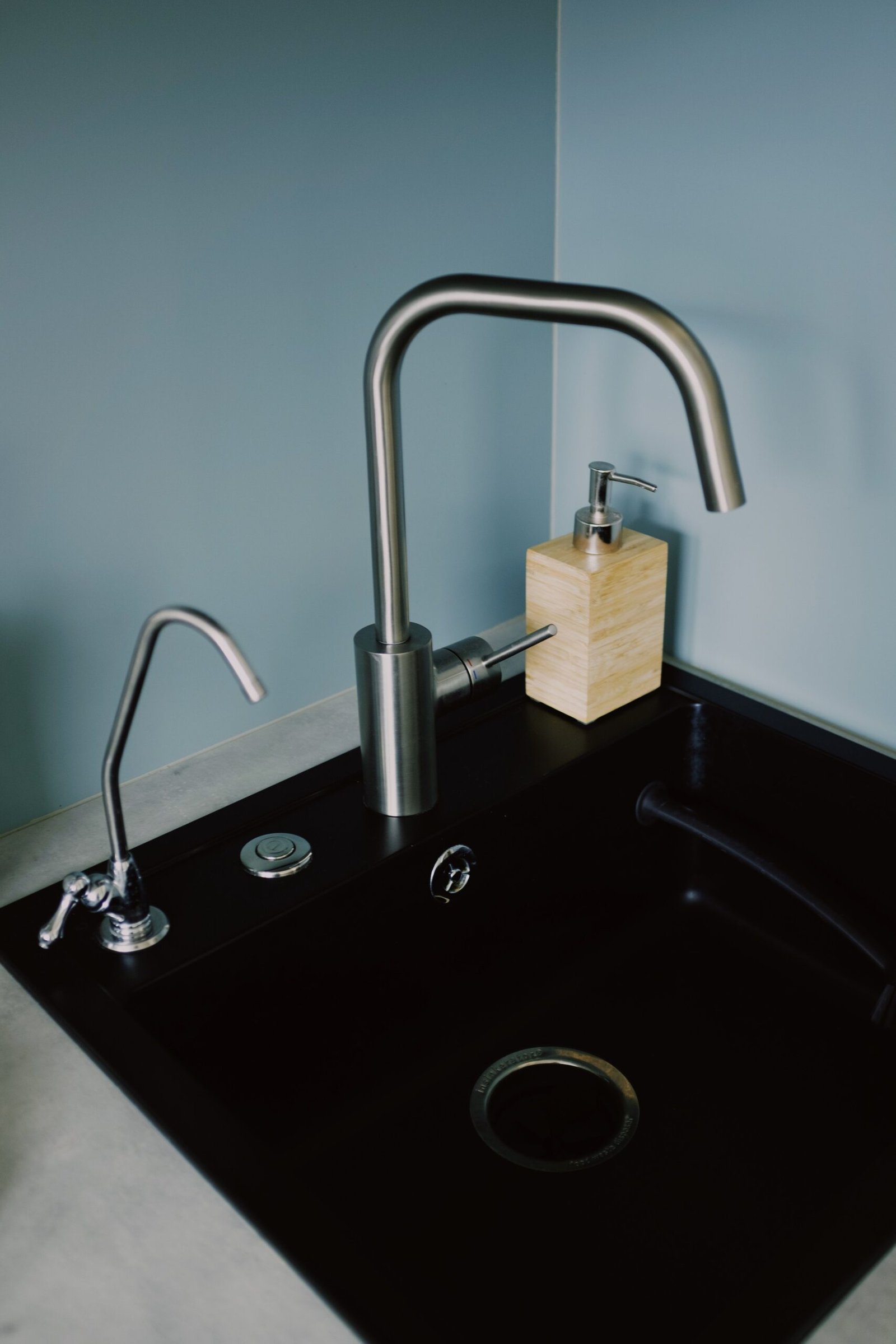
What Causes a Tap to Drip
A dripping tap almost always comes down to a worn internal part rather than a fault with the tap itself. Traditional taps, the kind you turn several full rotations to shut off, rely on a small rubber washer to seal the water flow. Over time this washer hardens, splits, or wears thin, and once it can no longer form a tight seal, water drips through. Modern mixer taps with a quarter-turn action work differently, using a ceramic disc cartridge instead of a washer, and these tend to fail when limescale or debris scratches the discs, preventing them from sitting flush.
Identifying which type of tap you have is the first step, since the repair differs depending on the mechanism inside.
Before You Start
Turn off the water supply before doing anything else. Most UK homes have isolation valves fitted directly under the sink, which can be turned with a flat-head screwdriver or by hand if they have a lever. If there are no isolation valves, turn off the main stopcock instead, usually located under the kitchen sink or near where the water enters the property. Once the supply is off, open the tap fully to release any remaining pressure and drain the last of the water.
You will typically need a flat-head screwdriver, an adjustable spanner, and a replacement washer or cartridge that matches your tap’s exact make, since UK tap components are not standardised across brands.
Fixing a Traditional Tap with a Worn Washer
1. Remove the handle
Prise off the small decorative cap on top of the handle, usually marked with an H or C, using a flat-head screwdriver. This reveals a screw underneath, which you can undo to lift the handle away, along with any metal shroud or cover beneath it.
2. Extract the valve
With the handle removed, you should see a hexagonal nut. Hold the tap body steady with one hand to avoid straining the pipework, then fit an adjustable spanner onto the nut and turn it anti-clockwise until it loosens. Lift the entire valve stem out.
3. Replace the washer
At the base of the valve you will find a small screw or clip holding the rubber washer in place. Remove it, take off the old washer, and fit an exact replacement matching the original size, usually half an inch in diameter for most basin taps. Getting the size right matters, since even a slightly mismatched washer will fail to seal properly.
4. Reassemble and test
Put the valve back in the tap body, tighten the nut, and reattach the handle and cap in the reverse order you removed them. Turn the water supply back on slowly and test the tap for drips.
Fixing a Modern Mixer Tap with a Cartridge
A single-lever mixer tap that drips typically has one internal cartridge controlling both hot and cold water, rather than a washer. The process is similar: turn off the water, remove the handle to expose the cartridge, and use a spanner to loosen and remove it. Ceramic cartridges cannot be repaired, only replaced as a complete unit, so take the old one with you when buying a replacement to make sure the new part matches exactly. Fit the new cartridge, reassemble the tap, and test it in the same way as a traditional tap.
When the Leak Is Coming from the Base or Spout
If water is leaking from beneath the handle rather than the spout, the valve O-ring is usually the culprit and needs replacing. If the leak comes from beneath the spout itself, it is the spout O-ring that needs attention instead. Access it by removing the grub screw at the base of the spout, lifting the spout away, sliding off the old O-ring, and fitting a new one before reassembling.
When to Call a Plumber
If the tap continues to drip after replacing the washer or cartridge, if you cannot identify the correct replacement part for your specific tap model, or if you are not confident dismantling the tap without risking damage to the pipework, calling a plumber is the safer option. A call-out for this kind of repair typically costs somewhere between eighty and one hundred and fifty pounds outside of emergency hours.
Frequently Asked Questions
How do I know if my tap has a washer or a cartridge?
Traditional taps that need several full turns to close usually have a rubber washer. Modern taps that shut off with a quarter turn, including most single-lever mixer taps, generally use a ceramic disc cartridge instead.
Do I need to turn off the whole house water supply to fix a dripping tap?
Not usually. Most homes have individual isolation valves under each sink, which allow you to shut off the water to that tap alone. The main stopcock is only needed if isolation valves are not fitted.
Why does my tap still drip after I replaced the washer?
This usually means the washer size did not match exactly, the tap seat itself is worn or scored, or the problem was actually caused by the O-ring rather than the washer. Checking the tap seat for limescale build-up or damage is worth doing if the drip persists.
Is it expensive to call a plumber for a dripping tap?
A standard call-out for this type of repair generally costs between eighty and one hundred and fifty pounds during normal hours, though this can vary depending on location and whether replacement parts are needed on the spot.
Can a dripping tap actually increase my water bill?
Yes. A tap dripping at a steady rate can waste a significant amount of water over the course of a year, and on a water meter this shows up directly on the bill, making it worth fixing promptly rather than leaving it.
Disclaimer: This article is for general informational purposes only and is not professional advice. Any DIY work described here is carried out entirely at your own risk. For structural, electrical, gas, or other safety-critical work, always consult a qualified tradesperson.