
Quick answer: Scent throw is how far and how strongly a candle’s fragrance reaches into a room. It comes in two forms. Cold throw is the scent of the candle while it is unlit, the smell you notice when you lift the lid or lean over the jar. Hot throw is the scent while the candle is burning, once the wax has melted into a pool and the heat is carrying fragrance into the air. A candle can be strong in one and weak in the other, and that gap is the reason a candle can smell wonderful in the shop and disappointing at home, or the other way round.
Throw is the single most useful word in home fragrance, and it is also one of the most misunderstood. People use it to mean “how strong a candle smells”, but strength is only half of it. A candle with a strong throw does two things: it smells clearly, and it reaches. A candle that smells strong only when your nose is an inch from the wax has a weak throw, however lovely the scent itself is. A candle that fills a room from the other side has a strong throw, even if the scent is gentle. This short guide explains what throw is, how cold and hot throw differ, what controls each one, how to test both at home, and why the same candle can smell different in two homes.
Scent Throw, Defined
Scent throw describes how effectively a scented product releases fragrance into the air around it. The phrase comes from candle making, where makers test how far a candle’s scent travels, but the idea applies to every home fragrance format: a candle, a reed diffuser, a wax melt, a room spray. In each case, throw is the result of fragrance molecules leaving the product, travelling through the air, and reaching your nose.
Two things decide whether throw is strong or weak. The first is how much fragrance the product releases. The second is how far that fragrance travels before it fades. A product that releases a lot of fragrance in one spot but never spreads it has poor throw. A product that releases steadily and spreads evenly has good throw. Neither is a property of the fragrance oil alone. Throw is a property of the whole system: the fragrance, the wax or base, the wick or reeds, the container, the room, and your nose.
That is why throw is judged in two stages for candles, and why this guide keeps them separate. Cold throw and hot throw are different mechanisms, controlled by different things, and tested in different ways. Confusing them is the most common reason people buy the wrong candle.
Cold Throw: The Scent of the Unlit Candle
Cold throw is the fragrance you notice from an unlit candle at room temperature. It is the scent that reaches you when you lift the lid, open the box, or lean over the jar in a shop. It is the candle’s first impression, and it is the reason a candle gets bought. A strong cold throw sells candles. It does not guarantee a strong hot throw.
Cold throw comes from fragrance molecules slowly evaporating off the surface of the solid wax. No heat is involved, so only the lightest, most volatile parts of the fragrance escape easily. That has two consequences. First, cold throw is dominated by top notes: the bright citrus, light florals and fresh green notes that lift off the wax first. The deeper base notes, the vanilla, amber and heavy woods, mostly stay locked in the wax until heat releases them, so a candle can smell bright and citrusy unlit and warm and woody once lit. Second, cold throw is judged close up. You smell it from a few inches away, not from across the room, because without heat there is nothing to carry the fragrance further.
Several things control cold throw. Fragrance load matters: the percentage of fragrance oil in the finished candle. A higher load usually means a stronger cold throw, up to a point, because wax can only hold so much oil before the candle burns badly. Wax type matters too: soy and coconut waxes are often said to give a good cold throw, because their softer surface releases fragrance readily. Cure time matters: a candle that has rested for a week or two after pouring usually smells stronger unlit than one poured yesterday, because the fragrance has had time to bind with the wax and then release evenly. Storage matters as well: a candle kept with its lid on, away from heat and sun, keeps its cold throw. A candle left open on a sunny windowsill loses it, because the lightest notes evaporate away before the candle is ever lit.
Cold throw is useful for one thing only: judging a candle before you buy it. It tells you almost nothing about how the candle will perform once lit. That is the trap. A candle with a powerful cold throw and a weak hot throw will smell wonderful in the shop and faint in your living room, and you will blame the candle, the room, or your nose, when the real problem is that you judged the wrong throw.
Hot Throw: The Scent While It Burns
Hot throw is the fragrance released while the candle is burning. Heat melts the wax into a liquid pool, and fragrance evaporates from that pool much faster than it ever could from solid wax. Warm air rising from the flame carries the fragrance across the room. Hot throw is the true performance of a scented candle in the home. It is what fills a room, and it is what decides whether a candle is bought again.
Hot throw is judged after the candle has been burning long enough to build a full melt pool, usually one to two hours, and never before the pool reaches the edges of the container. A candle judged after twenty minutes has barely started. The melt pool is the engine of hot throw: a wide, hot pool releases far more fragrance than a small, cool one, which is why wick size matters so much. A wick that is too small cannot heat the pool properly, so the candle smells faint however good the fragrance is. A wick that is too large overheats the pool, burns the fragrance off too fast, and can soot.
The factors that control hot throw overlap with cold throw but are not the same. Fragrance load matters again, and so does cure time. Wax type matters more here, and this is where the sources disagree honestly. Paraffin wax is traditionally favoured for hot throw, because it melts at a lower temperature and forms a larger, hotter melt pool. Soy wax burns cooler, which some makers say gives a gentler hot throw, while others say a well-made soy candle throws just as well. There is no settled answer, and a buyer should treat any claim that one wax always beats another as sales talk rather than fact. Wick size, container shape, fragrance stability under heat, and the balance of top, heart and base notes all play a part too: light citrus notes flash off quickly in the heat, while heavy base notes need sustained heat to release at all.
The practical point is simple. Hot throw is the throw that matters in your home, and it can only be judged by burning the candle properly, in a normal room, for a proper length of time. No sniff in a shop can tell you what it will be.
Cold Throw vs Hot Throw at a Glance
| Cold throw | Hot throw | |
|---|---|---|
| Candle state | Unlit, at room temperature | Burning, with a melt pool |
| What you smell | Fragrance evaporating slowly off solid wax | Fragrance carried off the hot melt pool |
| Judged from | A few inches away, lid off | Across part or all of the room |
| Dominated by | Top notes: citrus, light florals, fresh greens | The full fragrance: top, heart and base notes together |
| Main influences | Fragrance load, wax type, cure, storage, lid | Wick size, melt pool, fragrance load, cure, wax type, room |
| What it decides | Whether the candle gets bought | Whether the candle gets bought again |
| Best time to test | After curing, before first lighting | After one to two hours of burning, full melt pool formed |
The table is the whole guide in one place. If you remember one line from this article, remember this: a strong cold throw does not guarantee a strong hot throw, and a restrained cold throw can become fuller once the candle is burning.
What Controls Throw
Throw is not one thing. It is the result of several factors working together, and a weak link in any one of them can hold the whole candle back. The factors below are the ones that matter most, in the order a buyer can actually use them.
Fragrance load. This is the percentage of fragrance oil in the finished candle, usually somewhere between 6 and 12 percent depending on the wax and the maker. More fragrance usually means stronger throw, cold and hot, until the wax cannot hold any more. Beyond that point, extra oil does not make the room smell stronger. It makes the candle burn badly, smoke, or sweat oil on the surface. A high load is not a guarantee of a strong candle, and a modest load in a well-made candle can out-throw a heavily loaded candle with the wrong wick.
Wax type. Wax decides how the fragrance is held and released. Paraffin releases fragrance readily and is traditionally favoured for hot throw. Soy and coconut waxes hold fragrance well and are often praised for cold throw. Beeswax has a honey scent of its own that sits underneath any added fragrance. Blends are common, and a blend’s behaviour depends on the blend, not on any single wax in it. The wax comparison on this site sets out the trade-offs in full, and it is worth reading before you decide that one wax is always better than another.
Wick size and melt pool. The wick is the heater. Too small, and the pool stays small and cool, and the fragrance never leaves the jar properly. Too large, and the pool overheats, the fragrance burns off, and the candle soots. The right wick gives a full melt pool that reaches the edges of the container within about an hour, without smoking. If a candle tunnels, the pool never forms properly, and hot throw suffers with it, which is why tunnelling and weak throw so often appear together.
Cure time. A candle needs time after pouring for the fragrance to bind with the wax. Most makers recommend at least a week, and two weeks is better. A candle burned the day it was poured will usually smell weaker, hot and cold, than the same candle burned after a proper cure. This is one reason a candle bought from a small maker can improve over the first fortnight in your home.
Fragrance composition. Not all scents throw equally. Light, volatile notes such as citrus, mint and light florals evaporate easily and show well in cold throw, but can flash off quickly once lit. Heavy notes such as vanilla, amber, sandalwood and musk need heat to release, so they are quiet unlit and fuller once burning. A fragrance built mostly from light notes will smell bright in the jar and fade fast in the room. A fragrance built mostly from heavy notes will smell faint in the jar and grow as it burns. Neither is a fault. It is the composition doing what compositions do.
Container and room. A wide, shallow container gives a larger melt pool and usually a stronger hot throw than a tall, narrow one of the same wax and fragrance. A candle in a small, still room will always seem stronger than the same candle in a large, draughty room, because the fragrance has less air to fill and less moving air to carry it away. This is not the candle changing. It is the room changing what the candle can do.
Throw Beyond Candles: Reed Diffusers and Wax Melts
Throw is a candle term, but the idea applies to every format, and the comparison is useful because the mechanisms differ.
A reed diffuser has no hot throw at all. It works entirely by slow evaporation at room temperature, which is the same mechanism as a candle’s cold throw, except that it runs all day, every day, with no flame to help it. Its throw depends on the number of reeds, the thickness of the base, the fragrance load, and the air moving past it. That is why a diffuser can seem strong in a hallway with moving air and faint in a still bedroom, and why the troubleshooting guide for a diffuser you cannot smell starts with the reeds, the oil and the placement before it blames the fragrance.
A wax melt has no cold throw worth judging, because the wax is solid and usually kept in a packet, and no flame of its own. Its hot throw depends on the warmer: a tealight warmer or an electric warmer that heats the wax enough to release fragrance. A melt in a weak warmer can smell faint for the same reason a candle with a small wick does: not enough heat, not enough release.
A room spray has the strongest immediate throw of any format and the shortest lived, because the fragrance is released all at once into the air and then disperses. It is a burst, not a steady release, and it should not be judged by the same standard as a candle or a diffuser.
The point of the comparison is not to rank the formats. It is to show that throw always depends on the release mechanism, and that comparing a candle’s hot throw with a diffuser’s steady throw is comparing two different things. The comparisons on this site set out which format suits which room, and they are the right place to make that choice.
How to Test Throw at Home
You do not need equipment to test throw. You need a still room, a clock, and your own nose, used properly. The method below works for any candle, and it is the same method makers use in simplified form.
Test cold throw first. Wait until the candle has cured, or at least a week after you bought it. Put it in a still room with no competing smells, no cooking, no cleaning products, no other candle burning. Take the lid off, wait a minute, then lean over the jar from about 30 centimetres away and breathe in normally. Note what you smell and how strong it is. Then hold the jar closer, about 15 centimetres, and note whether the scent changes or only gets stronger. That is the cold throw. Do not press your nose to the wax. Sniffing at very close range tells you about the fragrance, not about the throw.
Test hot throw second. Light the candle in the same still room, in the evening, with the door closed and no draught. Let it burn until the melt pool reaches the edges of the container, usually one to two hours. Then leave the room for ten minutes, close the door behind you, and walk back in. The first breath as you enter is the honest test, because your nose has not adapted to the scent yet. Note how far into the room the scent reaches: only beside the candle, halfway across, or from the doorway. Then sit in the room for half an hour and note whether the scent stays steady, grows, or fades. That is the hot throw.
Compare the two, and keep a note. A candle with a strong cold throw and a weak hot throw usually has a wick or melt-pool problem, or a fragrance that is mostly light top notes. A candle with a weak cold throw and a strong hot throw usually has heavy base notes that need heat, and it is a better candle than its first sniff suggested. A candle that is weak in both usually has too little fragrance, too little cure time, or a wick that cannot heat the pool. A candle that is strong in both is a good candle, and it is worth remembering the maker.
Test in the room where the candle will live. A candle tested in a small bathroom will always seem stronger than the same candle in a large living room. Test where you will burn it, or the test tells you nothing about your home.
Do not test two candles at once. Your nose cannot judge two fragrances in the same room. Test one, air the room, and test the other on another day.
If the test shows a weak hot throw, do not throw the candle away at once. The fix is usually in the burn, not in the candle: a longer first burn, a full melt pool, a still room, and a wick trimmed to about 5mm. The guide to a candle that is not smelling strong sets out the fixes in order, and it is the right next step before you decide the candle itself is at fault.
Why the Same Candle Smells Different in Two Homes
This is the question that brings most people to this article, and the answer is that throw is not a fixed property of the candle. It is the result of the candle meeting a room, and rooms differ in every way that matters.
Room size. A candle that fills a small bedroom will seem faint in a large open-plan living room, because the same amount of fragrance has far more air to fill. This is the single biggest reason the same candle gets opposite reviews from different buyers. Match the candle to the room: a small candle for a small room, a large candle or two candles for a large room. The candle choosing guide on this site gives the size-to-room matching in full.
Draughts and airflow. Moving air carries fragrance away from the candle and out of the room, through gaps, vents and open doors. A candle beside a draughty window, under an extractor fan, or in the path of a hallway draught will always seem weaker than the same candle in still air. A little gentle air movement helps a diffuser, because it carries the scent around the room, but a strong draught hurts a candle, because it cools the melt pool, makes the flame flicker, and carries the fragrance away before it can build up.
Temperature. A cold room slows evaporation, so both cold and hot throw drop. A warm room helps hot throw, because the melt pool stays hot and the fragrance releases faster, but it also shortens the candle’s life. A candle burned in a cold conservatory in January will not perform like the same candle burned in a warm living room.
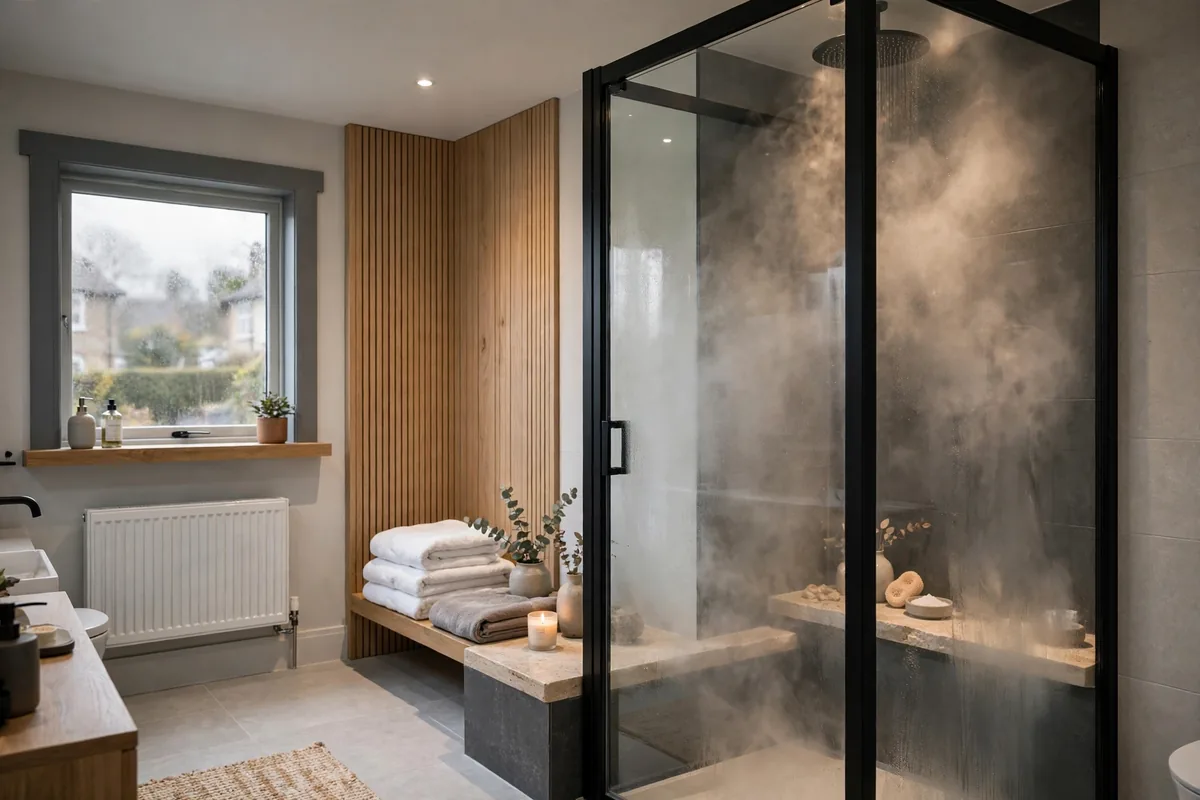
Humidity. A damp room, a bathroom after a shower, or a kitchen full of steam, can mute fragrance, because water in the air competes with fragrance molecules for your nose. A candle that smells clear in a dry bedroom can seem muted in a steamy bathroom, and the bathroom is also the room where a diffuser, which releases steadily all day, often works better than a candle.
Nose blindness. Your nose adapts to a constant scent within about twenty minutes and stops noticing it. This is olfactory fatigue, and it is the reason a candle can seem to fade while it is still burning perfectly well. The test in the section above works because it uses a fresh nose: leave the room, come back, and the scent is there again. If a candle smells strong when you walk in and faint after half an hour, the candle has not failed. Your nose has adapted, and that is normal. The reed diffuser troubleshooting guide on this site explains the leave-and-return test in full, and it applies to candles exactly the same way.
The candle itself, over time. A candle changes as it burns down. The fragrance load is not perfectly even through the wax, the wick can mushroom or clog, and the melt pool gets deeper as the wax level falls. A candle that threw well when it was full can throw less well when it is nearly finished, especially if the wick has not been trimmed. Trim the wick to about 5mm before every burn, keep sessions to three or four hours, and stop when about a centimetre of wax remains.
None of these is a defect in the candle. They are the conditions the candle is working in, and understanding them is the difference between blaming a good candle and fixing a fixable problem.
Frequently Asked Questions
What is scent throw in simple terms?
Scent throw is how far and how strongly a candle’s fragrance reaches into a room. Cold throw is the scent of the unlit candle. Hot throw is the scent while it burns. A candle can be strong in one and weak in the other.
Which matters more, cold throw or hot throw?
Hot throw matters more, because it is the scent you live with while the candle burns. Cold throw matters only at the point of purchase, when you are choosing between candles in a shop. Judge a candle you already own by its hot throw.
Why does my candle smell strong in the jar but weak when lit?
That is a strong cold throw with a weak hot throw. The usual causes are a wick that is too small to heat the melt pool properly, a fragrance built mostly from light top notes that flash off in the heat, or a room that is too large or too draughty for the candle. Give it a full melt pool first, then check the wick and the room size before you blame the fragrance.
Why does my candle smell weak in the jar but strong when lit?
That is a weak cold throw with a strong hot throw, and it is usually a good sign. The fragrance is built from heavier base notes, vanilla, amber, woods, that need heat to release. The candle will smell faint on the shelf and full once it has been burning for an hour or two.
Does a higher fragrance load always mean a stronger throw?
No. More fragrance usually helps, up to the point where the wax cannot hold any more. Beyond that, extra oil makes the candle burn badly rather than smell stronger. A well-made candle with a moderate load and the right wick can out-throw a heavily loaded candle with the wrong wick.
Does soy wax have a weaker throw than paraffin?
Not necessarily, and the sources disagree. Paraffin is traditionally favoured for hot throw because it forms a larger, hotter melt pool. Soy burns cooler, which some makers say gives a gentler hot throw, while others say a well-made soy candle throws just as well. Treat any claim that one wax always beats another as sales talk, and judge the candle by burning it.
How long should I burn a candle to judge its hot throw?
At least one to two hours, until the melt pool reaches the edges of the container. Judging a candle after twenty minutes tells you nothing, because the pool has barely formed. Keep sessions to three or four hours, and never leave a burning candle unattended.
Can I improve a candle’s throw?
Sometimes. Trim the wick to about 5mm, give it a full first burn so the melt pool forms properly, burn it in a still room, and match the candle size to the room. If the throw is still weak after that, the candle itself is the limit, and the guide to a candle that is not smelling strong sets out the remaining fixes in order.
Do reed diffusers have scent throw?
Yes, in the cold-throw sense: a diffuser releases fragrance by slow evaporation at room temperature, all day, with no flame. Its throw depends on the number of reeds, the base, the fragrance load, and the air moving past it. It has no hot throw, because nothing is heated.
Why does the same candle smell stronger in my friend’s house than in mine?
Room size, draughts, temperature, humidity and nose blindness all differ between homes. A small, still, warm room makes any candle seem stronger. A large, draughty, cold room makes the same candle seem weaker. Test the candle in the room where you will burn it, with a fresh nose, before you decide it is a weak candle.
The Short Version
Scent throw is how far and how strongly a candle’s fragrance reaches. Cold throw is the scent unlit, judged close up, dominated by light top notes, and useful only when you are choosing a candle. Hot throw is the scent while burning, judged across the room after a full melt pool has formed, and it is the throw that matters in your home. A strong cold throw does not guarantee a strong hot throw. What controls throw is the whole system: fragrance load, wax, wick and melt pool, cure time, fragrance composition, container, room, and your nose. Test both throws at home, in the room where the candle will live, with a fresh nose, and fix the burn before you blame the candle. If the throw is still weak after a proper test, the candle choosing guide and the guide to a candle that is not smelling strong are the right next steps.
This article is general information, not medical or veterinary advice. It does not diagnose or treat any person or animal. If a pet has a breathing condition, is very young or very old, is pregnant or takes medication, ask your own vet before any scented product comes into the house.