
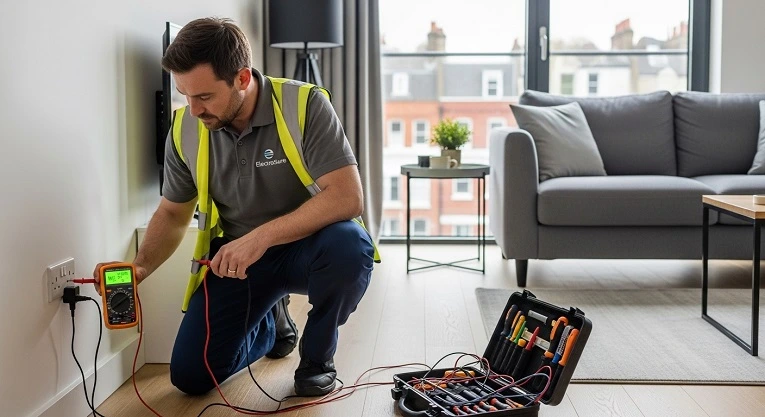
EICR Certificate and Cost in London
What Is an EICR?
An EICR is a formal safety document confirming that a property’s fixed electrical installation meets UK regulations. It identifies defects, deterioration, and safety risks within wiring systems.
For landlords in London, compliance is mandatory.
Is It Legally Required?
Yes. Landlords must obtain an electrical installation condition report every five years. Copies must be provided to tenants and local authorities upon request.
Non-compliance can result in heavy fines.
EICR Certificate Cost in London
Average pricing:
- Studio or 1 bed £120
- 2 to 3 bed £170
- 4 bed £250
- Commercial per circuit pricing £20 average
London EICR cost is typically higher due to demand and operational expenses.
What Is Included?
- Full wiring inspection
- Circuit testing
- Consumer unit checks
- Code classification
- Digital certificate
How Long Does It Take?
Small flats take 2 hours. Larger homes may take up to 4 hours.
What If the Property Fails?
C1 and C2 issues must be corrected within 28 days. After repairs, confirmation documentation is issued.
Why Choose Certified Professionals?
Registered electricians ensure legal compliance and accurate reporting. Always confirm NICEIC or NAPIT credentials.
Book Your Inspection Today
Booking a certified EICR ensures your rental property remains compliant, safe, and protected from penalties.
What Does an EICR Actually Inspect?
An EICR covers the fixed electrical installation: the wiring and components built into the property itself, rather than plug in appliances. The electrician examines the consumer unit, the general condition of the wiring, and accessories including sockets, switches and light fittings.
Earthing and bonding are checked to give fault currents a safe path, and protective devices such as RCDs are tested to confirm they trip correctly. The inspection combines visual checks with dead and live tests covering continuity, insulation resistance, polarity and earth fault loop impedance.
Who Legally Needs an EICR in England?
Private landlords
Under the Electrical Safety Standards in the Private Rented Sector (England) Regulations 2020, landlords must arrange inspection and testing at least every five years. A copy must go to existing tenants within 28 days, to new tenants before they move in, and to the council within seven days on request. Councils can fine up to £30,000 for non compliance.
Homeowners
Owner occupiers are not legally required to hold an EICR, but one is strongly recommended every ten years, when buying or selling, or if you notice warning signs such as flickering lights or buzzing sockets.
Businesses
Employers must keep electrical systems safe under health and safety law, and insurers often require periodic inspection. Commercial landlords typically arrange an EICR every five years.
What Happens During the Inspection?
The electrician starts with a visual assessment of the consumer unit, accessories and visible cabling, checking for damage, overheating and unsafe alterations, then runs a series of dead and live electrical tests.
Only a representative sample of sockets and switches is dismantled, which is standard practice, and inaccessible areas are recorded as limitations. Each observation is given a classification code, the installation is judged satisfactory or unsatisfactory, and you receive a formal written report, usually digitally.
What Affects the Price of an EICR in London?
London prices sit above the national average because of higher operating costs, parking and congestion charges, and strong demand. Your quote will mainly reflect property size, the number of circuits, the age of the installation, and how easily the consumer unit can be accessed.
Quotes normally cover the inspection and report only. Remedial work is priced separately, so ask whether a follow up visit to confirm repairs is included.
As a rough guide, expect around £120 to £150 for a small flat, £150 to £200 for a two to three bedroom property, and £200 to £300 or more for a larger home. These are typical ranges, not fixed prices, and prices vary between electricians, so compare two or three written quotes.
EICR vs Other Electrical Certificates
An Electrical Installation Certificate (EIC) is issued for new installations or major new work. A Minor Works Certificate covers small alterations such as adding a socket. PAT testing checks portable appliances, not fixed wiring. An EPC rates energy efficiency, while a gas safety certificate covers gas appliances and must be renewed every 12 months in rentals.
For landlords, the EICR and the gas safety certificate are the two main recurring safety checks, running on different schedules, so track both renewal dates.
How to Choose a Qualified Electrician in London
Choose an electrician registered with a government approved competent person scheme such as NICEIC or NAPIT, verifiable on the Electrical Safety Register. Ask for a fixed written quote stating what is included and how the report will be delivered, and check public liability insurance plus genuine reviews.
Be cautious of quotes that seem unusually cheap. A proper EICR takes a couple of hours of skilled work plus calibrated test equipment, so a rock bottom price can mean too few circuits tested or live tests skipped.
Understanding EICR Codes: C1, C2, C3 and FI
Every observation is given a classification code. C1 means danger is present and needs immediate action. C2 means potentially dangerous and needs urgent remedial work; any C1 or C2 makes the report unsatisfactory. C3 means improvement is recommended but the report can still be satisfactory. FI means further investigation is required.
What to do if your report is unsatisfactory
Remedial work must be completed within 28 days of the inspection, or sooner if the report says so. The electrician then provides written confirmation for your records. For landlords, this 28 day timescale is a legal requirement.
Frequently Asked Questions
How often do landlords need an EICR?
At least every five years, or sooner if the previous report says so. The due date is printed on the report.
Is an EICR legally required for homeowners?
No, but one every ten years is widely recommended, plus an inspection when buying a property or after major electrical work.
How long is an EICR valid?
The report stays valid until the next inspection date it recommends, normally five years for rentals, provided any unsatisfactory codes were resolved.
Can tenants ask to see the EICR?
Yes. Landlords must supply a copy to existing tenants within 28 days, and to new tenants before they move in.
What happens if my property fails the EICR?
An unsatisfactory report means C1, C2 or FI codes were found. Remedial work must be completed within 28 days, after which you receive written confirmation that the installation is safe.
How much does an EICR cost in London?
Typical prices range from around £120 for a small flat to £250 or more for a large house. Prices vary between electricians, so compare written quotes and check what each includes.