
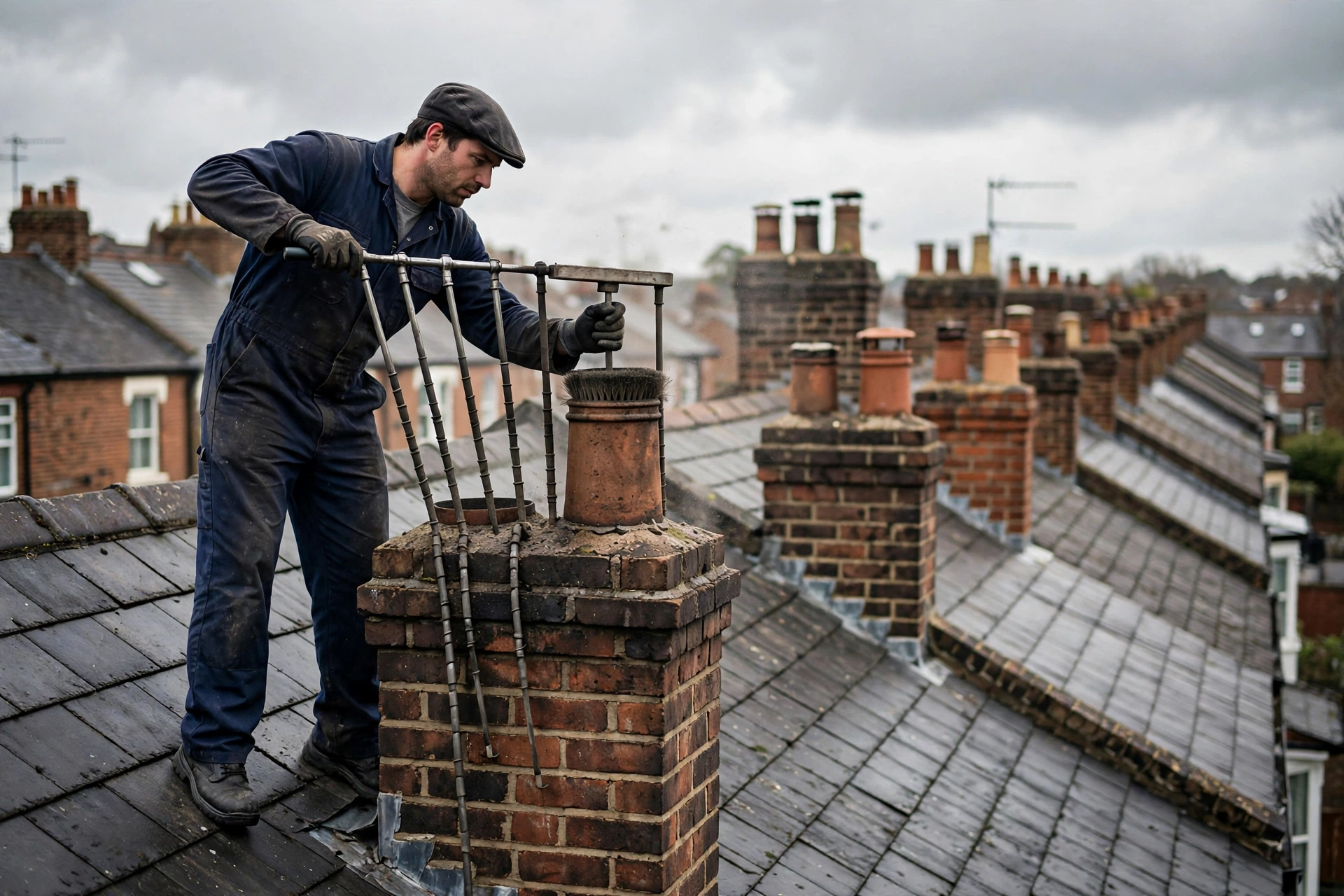
Direct answer: A chimney should be swept at least once a year before the heating season starts. If you burn wood, and especially unseasoned wood or bituminous coal, sweep twice a year. Gas fires need an annual service with a flue check. Regular sweeping removes soot and creosote, cuts the risk of chimney fires and helps your fire burn efficiently.
A clean chimney is one of the simplest ways to keep your home safe. This guide explains how often to sweep, what a sweep does, and how sweeping records connect to your home insurance.
How Often Should a Chimney Be Swept?
Sweeping frequency depends on what you burn. The table below reflects general guidance from UK chimney sweep associations.
| Fuel or appliance | Recommended sweeping frequency |
|---|---|
| Seasoned wood (under 20% moisture) | At least once a year, before the heating season |
| Unseasoned or wet wood | Twice a year |
| Bituminous (house) coal | Twice a year |
| Smokeless fuel | Once a year |
| Oil-fired appliance | Once a year |
| Gas fire or gas boiler flue | Once a year, as part of an annual service |
| Biomass or wood pellet boiler | At least once a year, as advised by the installer |
These are minimums. Daily winter use counts as heavy use, so sweep more often. Old chimneys or heavy build-up may need extra visits.
Why Regular Chimney Sweeping Matters
Every fire leaves deposits in the flue. Wood smoke leaves creosote, a highly flammable tar-like substance. Coal leaves soot that narrows the flue. A blocked flue forces smoke and carbon monoxide back into the room.
Sweeping removes these deposits before they become dangerous, and improves the draw so your fire lights easily and burns efficiently.
Signs Your Chimney Needs Sweeping Now
Do not wait for your annual appointment if you notice any of these:
- Smoke spills into the room when you light the fire
- A strong smoky smell lingers even when the fire is out
- The fire burns sluggishly or is hard to keep lit
- Black staining appears around the fireplace opening
- Soot or debris falls down the chimney into the grate
- You suspect birds are nesting in the pot, especially in spring
Any of these means the flue is restricted. Book a sweep promptly and avoid using the fire until it has been checked.
Is Chimney Sweeping a Legal Requirement?
No UK law forces homeowners to sweep their chimney. But insurers expect reasonable maintenance. After a chimney fire, an insurer can reduce or reject a claim without proof of maintenance, and a sweeping certificate is the simplest proof.
Landlords vs tenants: who is responsible?
Landlords must arrange an annual gas safety check for gas appliances by law. That check is not chimney sweeping, but a landlord with a solid fuel fire in a rental property should still arrange regular sweeping and keep the certificates. If you rent out property, our guide to fire risk assessments for landlords and property owners explains what else belongs in your file.
Tenants should check their tenancy agreement. You may be responsible for sweeping if you use the fire, so never light a fire in a rental property without knowing when the chimney was last swept. If the agreement is unclear, ask your landlord in writing before the heating season starts.
What Happens on Sweep Day? A First-Timer’s Walkthrough
Never booked a sweep before? Here is exactly what to expect. A standard sweep is quick and far cleaner than most people expect.
- The night before: let the fire go out completely. Ideally, stop burning a full 24 hours before the visit so the flue is cool.
- Prepare the room: move ornaments, rugs and furniture back from the fireplace so the sweep has space to work.
- Sealing: the sweep lays dust sheets and seals the fireplace opening, leaving a small gap for the rods.
- Brushing: rods with brushes are pushed up the flue from inside the room to loosen soot and creosote. No roof climbing is needed for a standard sweep.
- Vacuuming: an industrial vacuum with a fine filter captures the loosened debris.
- Draw test: a smoke pellet checks that the flue pulls correctly.
- Certificate: you receive a written record of the work done.
Most standard sweeps take 30 to 60 minutes per flue; nest removal takes longer. Be home so the sweep has access and can talk you through their findings.
Chimney Sweeping Certificates: What to Ask For
Always ask for a certificate of sweeping. It should record the date, your address, the work carried out and the sweep’s details. Keep it with your home documents; it proves professional maintenance and helps when selling.
Practical checklist: certificates and insurance
- What the certificate is: a written record that a professional sweep cleaned your flue on a given date. Ask if your sweep is registered with NACS or the Guild of Master Chimney Sweeps.
- How long to keep it: keep every certificate for as long as you own the home. Insurers can ask about maintenance history going back years.
- What to show an insurer: the certificates, plus receipts and any written report from the sweep.
- Check your own policy: policy wordings differ. Some name a sweeping schedule, most use “reasonable care” language. Read your policy’s maintenance clauses so you know what your insurer expects.
Does Home Insurance Require a Swept Chimney?
Most policies do not name an exact schedule, but they expect reasonable maintenance. After a chimney fire, an insurer may ask for evidence the chimney was looked after, and a sweeping certificate is the simplest proof.
How Much Does Chimney Sweeping Cost in the UK?
Prices vary by region, access and chimney condition, so always get a quote upfront. As a rough guide, a standard sweep of one flue typically costs around £90 to £120, and more in London. Treat that as a ballpark, not a fixed rate.
Bird nest removal, CCTV flue inspections and repairs cost extra. Be wary of unusually cheap offers that skip the inspection or the certificate.
Can You Sweep Your Own Chimney?
DIY sweeping kits are sold online, and on a simple straight chimney it is physically possible to do the job yourself. But weigh up the trade-offs honestly.
You will not get a trade-body certificate, which matters for insurance and landlords’ records. An insurer may reject a claim without proof of professional maintenance, and containing the mess without a proper vacuum is hard.
For most homeowners, a professional sweep is the safer and simpler choice. If you do tackle it yourself, wear a proper dust mask and goggles, seal the room with dust sheets, and test the draw afterwards. Never attempt it if you are unsure about the condition of the flue.
Just Moved In? Check the Chimney Before Your First Fire
Ask the seller or landlord for old sweeping paperwork, and book an inspection before your first fire if there is none. Check for bird nests, especially in spring. For older chimneys, a CCTV flue inspection shows the liner’s condition before you rely on it.
When Is the Best Time of Year to Book a Sweep?
Spring, at the end of the burning season, is ideal. Soot and moisture left in the flue over summer can form acids that corrode the liner.
Autumn is the busiest time for sweeps, and good ones book up fast. If you missed the spring window, book in September to beat the autumn rush rather than waiting until the first cold snap.
How to Keep Your Chimney Safer Between Sweeps
- Burn dry, seasoned wood only. Aim for wood under 20% moisture, checked with a cheap moisture meter. Wet wood creates far more creosote.
- Never burn treated timber, painted wood or household rubbish. They release harmful chemicals and heavy deposits.
- Keep air vents unblocked so the fire gets a steady air supply and burns cleanly.
- Fit a carbon monoxide alarm in any room with a fuel-burning appliance, and test it regularly.
- Consider a cowl or bird guard on the pot to stop nesting and rain entry.
- Let the fire burn hot rather than slumbering, as slow smoky fires deposit more creosote.
Frequently Asked Questions
How often should a chimney be swept if I rarely use the fireplace?
At least once a year. Nests, leaves and debris can block a flue that has sat idle for months, so have it swept before the first fire of each season.
Does a gas fire need sweeping?
Gas flues need checking once a year as part of an annual service, mainly for blockages, debris and carbon monoxide risks.
How long does a chimney sweep take?
Usually 30 to 60 minutes per flue. Allow longer for nest removal or heavy tar build-up.
Will sweeping make a mess in my home?
A professional sweep should leave almost no mess, using dust sheets and industrial vacuums. Move ornaments and furniture away from the fireplace first.
What is creosote and why is it dangerous?
Creosote is a tar-like deposit left by burning wood, especially wet wood. It is highly flammable and the main cause of chimney fires. Regular sweeping removes it before it can ignite.
Do I need to be home during the sweep?
Yes. The sweep needs access to the fireplace and may want to discuss what they find.
The Bottom Line
Sweep once a year as a minimum, twice a year for wood and house coal, and service gas flues annually. Book in spring if you can, keep your certificates, burn dry fuel, and fit a carbon monoxide alarm. These small habits keep your chimney safe and your home insurance straightforward.