
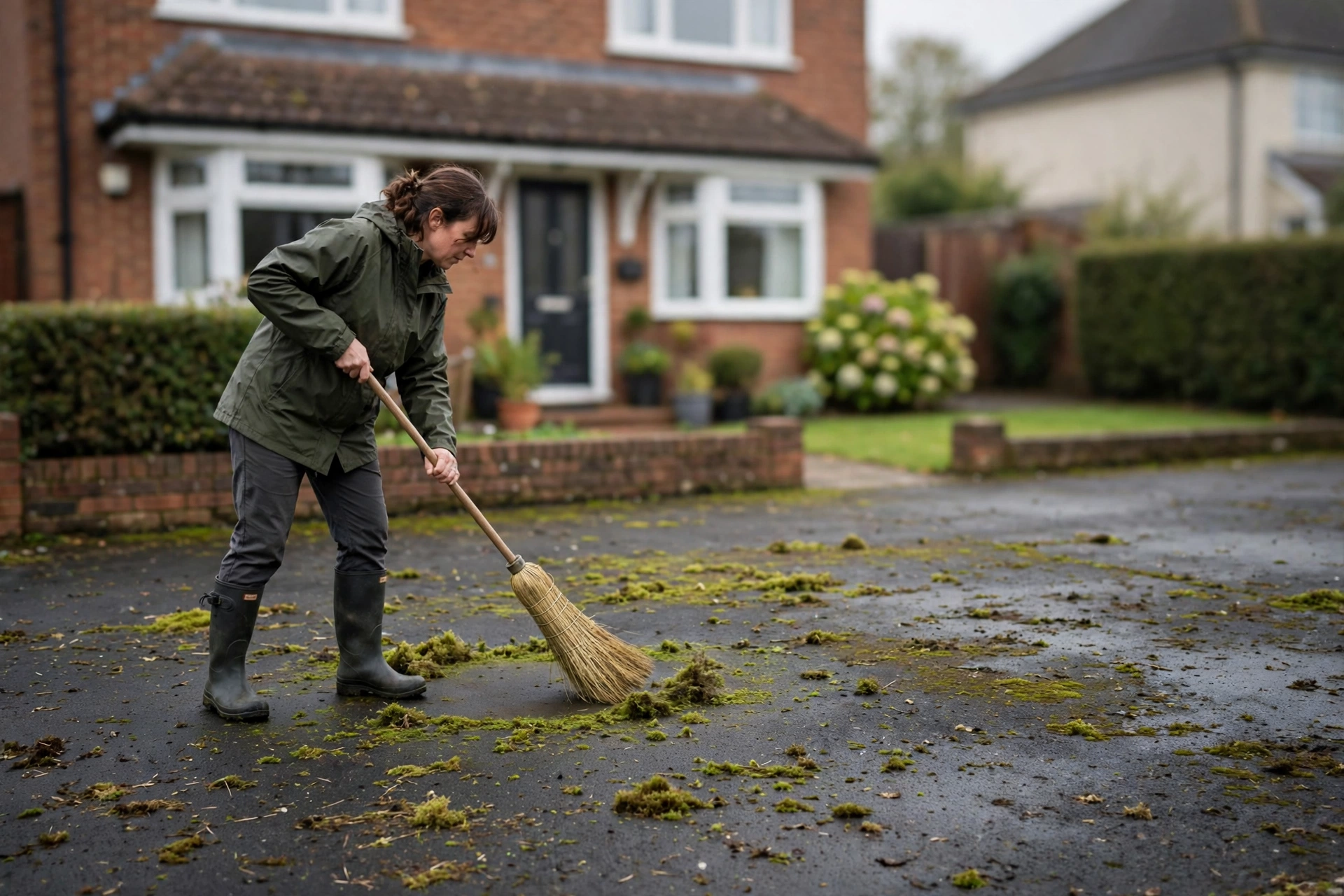
To remove moss from a tarmac driveway, sweep away debris with a stiff brush. Apply a tarmac-safe moss killer, leave it to work for the time stated on the label, then brush the dead moss away and rinse. Finish with a gentle pressure wash on a low setting. Avoid harsh chemicals and high pressure, which can damage the tarmac surface.
Moss makes a driveway look tired and slippery after rain. This guide shows you the safest DIY way to remove it, what to avoid, and how to stop it coming back.
Moss, algae or lichen? Identify it first
Not every green patch is moss, and treatment works best when you know what you are dealing with:
- Moss: soft, spongy green cushions that pull up easily. Grows in damp, shaded spots.
- Algae: a thin green or black film that feels slimy. It sits on the surface rather than rooting in.
- Lichen: crusty, pale grey or white patches stuck flat to the surface. The hardest to shift.
A standard moss killer handles moss and algae. Lichen needs longer treatment, plus a second round if patches survive.
Why does moss grow on tarmac driveways?
Moss loves damp, shaded spots where water lingers: north-facing drives, areas under trees, and dips where puddles form. Tarmac is slightly porous, so it holds enough moisture for spores to settle, and established moss then traps even more water.
You cannot change which way your driveway faces, but you can fix the conditions that help moss grow, as the prevention steps below show.
What you will need
Gather everything before you start:
- A stiff-bristled brush or yard broom
- A wire brush for stubborn patches (use it gently)
- A moss killer labelled as safe for tarmac, asphalt or driveways
- A garden sprayer or a watering can with a rose head
- Protective gloves and safety glasses
- A garden hose for rinsing
- A pressure washer with a fan nozzle (optional)
Which moss killer to use on tarmac
Choose a product labelled safe for tarmac, asphalt or driveways:
- Spray and leave formulas (e.g. Wet and Forget): spray on and walk away. Best for light to moderate growth and large areas.
- Concentrated driveway moss killers (e.g. Pro-Kleen): dilute as the label directs. Good value for bigger driveways.
- Sodium percarbonate: a typical mix is 40g per square metre in warm water. Plant-friendlier than bleach. Follow the label for exact dosages.
- Ferrous sulphate based killers: turn moss black within hours. They can stain nearby stone, so rinse path edges straight after applying.
Ratios and waiting times differ between brands, so always follow the label.
Which method is right for your situation?
| Your situation | Best approach | Why |
|---|---|---|
| Light moss, no pressure washer | Stiff brush plus sodium percarbonate wash | Cheap, gentle, no special equipment needed |
| Light to moderate moss | Brush, then a spray and leave moss killer | Simple spray application, minimal effort |
| Heavy, thick moss | Brush first, then ferrous sulphate killer, repeat after two weeks | Kills roots that brushing alone misses |
| Eco priority, near plants or a pond | Sodium percarbonate at label dosage | Plant-friendlier than bleach, breaks down naturally |
| Large driveway, short on time | Hire a professional cleaner | Faster on big areas; see costs below |
How to remove moss from a tarmac driveway
Follow these steps in order. Expect a few hours of active work, plus waiting time for the moss killer.
- Clear the driveway. Move cars, bins and plant pots away. Sweep off leaves and loose dirt, as moss killer works best on a clean surface.
- Brush off the loose moss. Scrub firmly with your stiff brush, working in one direction. Sweep the loosened moss into piles and bin it. A wire brush helps on thick patches, but keep strokes even.
- Apply moss killer. Mix as the label directs and spray the mossy areas plus a little beyond. Wear gloves and safety glasses, and keep children and pets off until dry.
- Wait for it to work. Most products need several hours or a full day to kill moss to the root, which turns brown or black as it dies. Pick a dry spell of at least 24 hours.
- Brush and rinse again. Once the moss has died, scrub once more to lift the remains. Rinse with a garden hose, directing water away from flower beds.
- Pressure wash gently (optional). For remaining stains, use a pressure washer on its lowest setting with a wide fan nozzle. Hold the lance at least 30 cm away and keep it moving. Never use a concentrated jet. High pressure can strip the bitumen binder and leave tarmac pitted.
Can you pressure wash a tarmac driveway?
Yes, but take care. Tarmac is tougher than block paving, yet a careless blast can do more harm than the moss ever did.
What can go wrong
- High pressure strips the bitumen that binds the aggregate together
- A narrow jet can carve lines or pits into the surface
- Water forced into cracks can worsen freeze damage in winter
If your tarmac is old or crumbling, skip the pressure washer and stick to brushing.
How to pressure wash safely
- Use a fan nozzle, never a turbo or pencil jet
- Start on the lowest setting and test a hidden corner first
- Keep the lance at least 30 cm away and keep it moving
- Work in smooth, overlapping passes
What NOT to use on tarmac
- Household bleach: it can discolour tarmac and break down its surface, and runoff harms nearby plants.
- Harsh solvents (white spirit, petrol, strong degreasers): these can soften and dissolve the bitumen binder.
- Boiling water: extreme heat can soften older bitumen, so let water cool before pouring.
- Aggressive pressure washing: a turbo nozzle, a lance closer than 30 cm, or a jet held still can pit the surface.
When to treat: a seasonal calendar
- April to May (ideal): mild, dry weather and moss in active growth, so treatments absorb well.
- June to August: treat early morning or evening. Hot sun dries the product too fast.
- September to October (ideal): clear autumn growth before the damp winter months.
- November to February (avoid): frost and constant wet wash treatments away before they act.
DIY or hire a professional?
Most driveways are a manageable DIY job. Typical costs:
| Item | Typical DIY cost | Typical professional cost |
|---|---|---|
| Stiff brush (one-off buy) | £10 to £20 | Included |
| Sodium percarbonate, 5 kg tub | £15 to £25 | Included |
| Ready-to-use moss killer, 5 litres | £15 to £30 | Included |
| Pressure washer hire for a day | £40 to £70 | Included |
| Full driveway clean | £40 to £120 in products and hire | Typically £3 to £6 per square metre |
Prices vary by region, brand and condition, so treat these as rough guides. DIY usually wins for small to medium drives; a professional makes sense for very large drives or fragile old tarmac.
How to stop moss growing back
Removing moss is only half the job. Without a few changes, it will return within a year.
Improve drainage
Clear blocked gutters and gullies so water does not sit on the drive. Repair dips where puddles form.
Let in more light
Trim back overhanging branches. Moss hates sunlight, so extra light makes a big difference.
Sweep regularly
A quick sweep every few weeks removes the leaves and dirt moss feeds on.
Treat preventatively
Apply a light dose of moss killer once a year, usually in autumn.
Keep the edges tidy
Weeds along driveway edges trap moisture and give moss a foothold. Pull them out by hand, or read our guide on getting rid of weeds without chemicals for plant-safe methods.
Year-round prevention checklist
- Spring: apply a light moss inhibitor, trim back overhanging branches
- Summer: sweep monthly, keep gutters and gullies clear
- Autumn: clear fallen leaves weekly, apply a preventive moss treatment
- Winter: do not let debris sit on the surface, brush away pooled water
Safety, pets, plants and the environment
- Read the label first and follow the dilution rates exactly
- Wear gloves and eye protection when handling any chemical product
- Keep pets and children off until the treated surface is fully dry
- Protect ponds, streams and vegetable beds: direct runoff away from them
- Sodium percarbonate is plant-friendlier than bleach, but still rinse nearby plants afterwards
- Never mix different cleaning chemicals together
Frequently asked questions
Will bleach damage my tarmac driveway?
Yes, it can discolour tarmac and break down its surface over time. Use a product made for driveways instead.
How long does moss killer take to work?
Most start working within hours, with moss turning brown or black in 24 to 48 hours. Heavy growth may need a second application after a week or two.
Can I just scrape the moss off and skip the chemicals?
Brushing removes visible growth, but roots and spores stay behind, so it usually grows back within weeks without a moss killer.
When is the best time of year to remove moss?
Late spring (April to May) or early autumn (September to October); see the seasonal calendar above.
Will moss damage my tarmac if I leave it?
Over time, yes. Moss holds moisture against the surface, weakening tarmac and worsening cracks when trapped water freezes, and it makes the surface slippery.
Is moss killer safe for pets?
Most are safe once the surface is completely dry. Check the label, and keep pets off during application and until dry.
Conclusion
A mossy tarmac driveway is easy to fix with a stiff brush, a suitable moss killer and a little patience. Work gently, protect the surface, and follow the prevention steps above so it stays clean, safe and good looking. Make it part of your seasonal routine, alongside the rest of your spring exterior clean-up.