
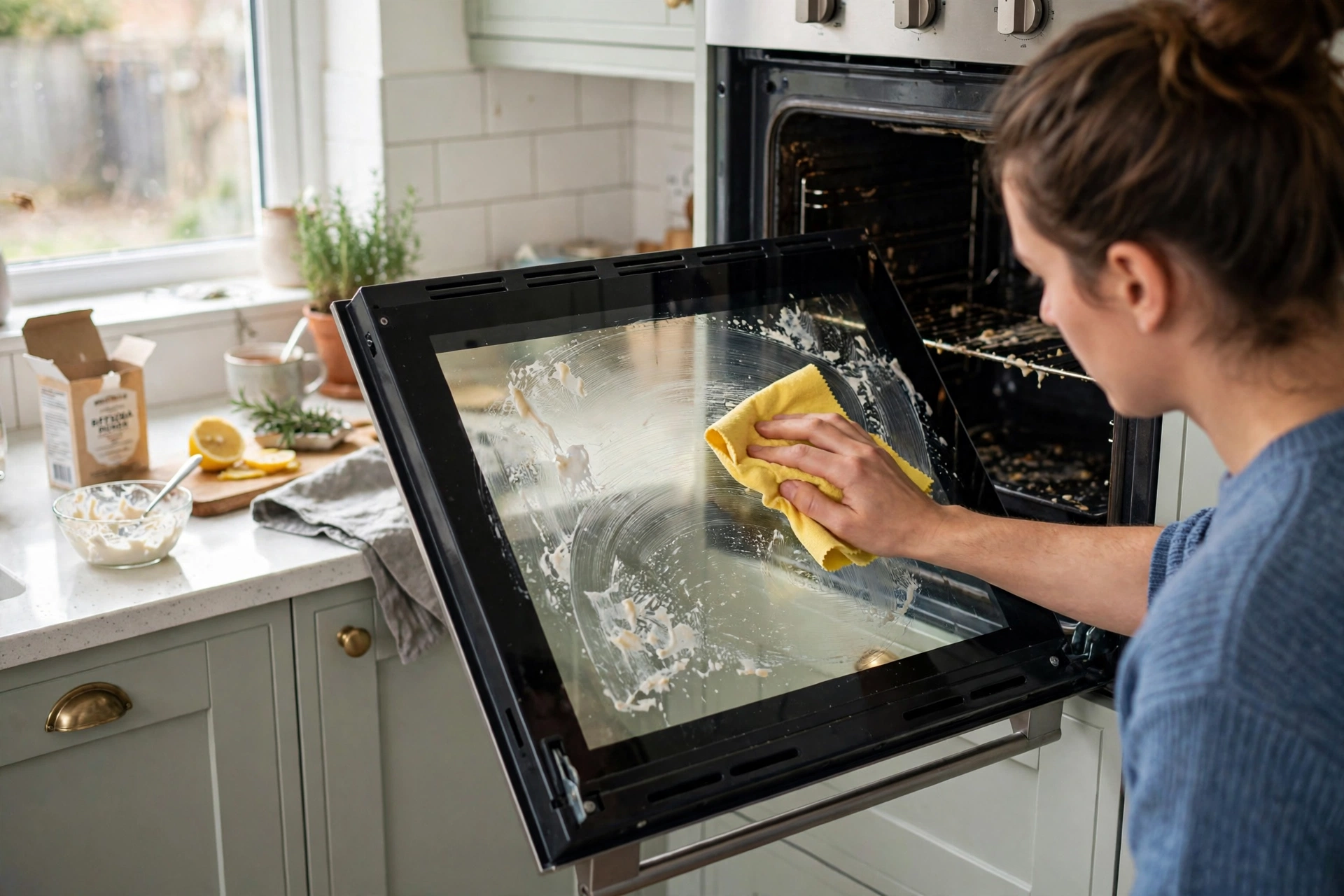
Quick answer: To clean the inside of an oven glass door, spread a bicarbonate-of-soda paste over the cold glass, leave it for 15 to 20 minutes, wipe it off with a non-scratch sponge, rinse with a damp cloth, then buff dry with a microfibre cloth after a light white vinegar spray. Avoid steel wool and harsh chemicals, which can scratch tempered glass.
A cloudy oven door hides your food and makes the kitchen look neglected. Grease, steam and baked-on spills build up every time you roast or bake. This guide covers the full method, the safety rules for tempered glass, and a maintenance schedule to keep grime away.
Why the Inside of an Oven Glass Door Gets So Dirty
Every roast sends fat droplets onto the inner panel, and steam bakes into a cloudy film. The inside faces the full oven heat, 180 to 220 degrees, which hardens each layer onto the last. That is why a damp cloth fails once buildup sets in. You need a method that softens the grime first.
What You Will Need
Gather everything before you start:
- Bicarbonate of soda
- White vinegar in a spray bottle
- Warm water
- A small bowl and an old toothbrush or soft brush
- A non-scratch sponge or soft cloth
- A microfibre cloth for polishing
- Rubber gloves
- Old towels to protect the floor
How to Clean the Inside of an Oven Glass Door
The job takes about 45 minutes, mostly waiting while the paste works.
- Make sure the oven is completely cool. Wait at least an hour after cooking. A temperature shock can stress tempered glass, and products bake onto hot surfaces.
- Protect the area below the door. Open the door fully and lay old towels along the bottom edge and on the floor to catch paste and drips.
- Mix the paste. Stir three tablespoons of bicarbonate of soda with warm water, a little at a time, until you have a thick, toothpaste-like paste.
- Spread it over the glass. Wearing rubber gloves, cover the whole inside panel with your fingers or a soft cloth. Go generously over the brownest areas, but avoid the rubber door seal.
- Leave it for 15 to 20 minutes. For heavy buildup, leave it up to an hour. The paste softens grease so you wipe rather than scrub.
- Wipe the paste away. Wipe with a damp non-scratch sponge in firm strokes, rinsing often. An old toothbrush helps in corners. Repeat with a clean damp cloth until no residue remains.
- Polish with white vinegar. Spray a light mist of vinegar and buff dry with a microfibre cloth. Check from different angles for missed patches.
Which Cleaning Method Should You Use?
The bicarbonate paste is the safest all-round choice. Here is how the common methods compare.
| Method | Time | Effort | Cost | Best for |
|---|---|---|---|---|
| Bicarbonate-of-soda paste | 30 to 60 min, mostly waiting | Low | Very low | Most ovens and regular cleaning |
| Dishwasher tablet | 20 to 30 min | Low | Low | Quick refresh on light grime; use a pressed tablet, not a pod |
| Steam from hot water | 15 to 20 min | Low | Very low | Loosening a light cloudy film |
| Lemon and water | 30 to 40 min | Low | Low | Light grease and freshening oven smell |
| Commercial oven cleaner | 20 to 60 min | Low, but wear gloves and ventilate | Medium | Very heavy buildup, used with care |
Important Safety Warnings for Tempered Glass
Oven doors use tempered glass, which is strong but has specific weaknesses. Follow these rules every time.
Always Let the Oven Cool Completely
Rapid temperature changes are tempered glass’s enemy. Never pour cold water or cold cleaning solution onto hot glass, as thermal shock can crack or shatter the panel.
Never Use Abrasive Tools
Steel wool, wire brushes, scouring pads and metal scrapers can scratch tempered glass, and deep scratches create weak points that fail more easily under heat stress. Stick to soft cloths, non-scratch sponges and old toothbrushes. If your glass already has marks, read our guide on how to remove scratches from glass before attempting anything stronger.
Skip Harsh Chemical Cleaners
Caustic oven cleaners and bleach-based sprays can damage the glass coating and the seals, and their fumes linger in the cavity and can taint food. The bicarbonate method works without these risks. For a streak-free finish like the one in our window cleaning tips, the vinegar polish at the end does the job.
Keep Water Away From Vents and Heating Elements
Do not flood the door or let liquid run into the vents along its edges. Trapped water can rust the frame and damage the insulation. Keep solutions on the glass surface only, and wring out your cloth before wiping near seals, hinges and vents.
What About Grime Between the Glass Panes?
Most oven doors hold two or three panes, and grease can enter between them through the top and bottom vents. Check your manual first. Some models have a hinge-lock or clip system for lifting the inner pane out, while many do not.
Never force clips or pry the door apart. Wrong disassembly can damage the hinges or seal, crack the glass, and void your warranty. If the manual says nothing, or the grime sits between factory-sealed panes, call the manufacturer or a qualified appliance technician.
Troubleshooting Common Problems
If the first pass leaves the glass less than clear, try these fixes before anything stronger.
- The paste dried out. Mist it with warm water to reactivate it, or wipe away and apply a fresh, wetter layer.
- White residue is left behind. That is unrinsed bicarbonate. Wipe again with a clean damp cloth, rinsing often, then do the vinegar polish.
- The finish looks streaky. Streaks mean the glass was buffed while still damp. Dry it fully with a clean microfibre cloth and check from the side for missed patches.
- Brown stains remain after two rounds. Apply a third layer to stubborn spots and cover with a damp cloth to keep the paste active longer, then wipe and polish as before.
- You notice light scratches. Stop applying pressure and switch to the gentlest cloth you have. Read our guide on how to remove scratches from glass before attempting anything stronger.
A Note on Pyrolytic (Self-Cleaning) Ovens
A pyrolytic oven heats the cavity to several hundred degrees, turning residue to ash you wipe away, glass included. Do not use chemical cleaners or the bicarbonate paste inside unless your manual allows it, as residues can bake on or fume in the extreme heat. If cloudy patches remain after a cycle, the bicarbonate method is a safe follow-up once the oven is cold.
How Often Should You Clean the Glass?
A simple schedule stops heavy buildup returning:
- After every messy cook: once cool, wipe the inner glass with a damp cloth. One minute now stops splatters baking on.
- Run the extractor fan while cooking. It pulls grease-laden steam away, so less film settles.
- Cover splattering foods. A roasting lid, a loose foil tent or a splatter guard keeps fat off the door.
- Put a drip tray on the lower rack. It catches drips before they reach the door.
- Once a month: do the full bicarbonate treatment, or a 10-minute refresh if the glass is lightly marked.
- Every three months: check the seal and glass edges for trapped grime. Clean gently with warm soapy water and dry fully.
Roast meat weekly and a monthly deep clean suits you. Mainly bake and every six to eight weeks is enough. White vinegar suits many jobs, as our guide to removing limescale naturally shows.
Frequently Asked Questions
Can I use a razor blade or glass scraper on an oven door?
Not recommended. Scrapers can scratch tempered glass and weaken the panel. The paste method removes even stubborn stains without a blade.
Is white vinegar safe on oven glass?
Yes. It cuts grease film and leaves glass streak-free. Spray lightly and buff dry. Do not mix it with the paste at the same time, as they neutralise each other.
Can I take the oven door apart to clean between the glass panels?
Some models allow it, but check your manual first. If grime sits between factory-sealed panels, contact the manufacturer or a qualified technician.
Will bicarbonate of soda scratch the glass?
No, not as a soft paste with a cloth or non-scratch sponge. It is far gentler than scouring pads. Let the paste work through soaking time rather than scrubbing hard.
Should I use a dishwasher tablet or a pod on oven glass?
Use a pressed tablet, not a pod. Dampen it and rub gently over the glass, then wipe clean. Pods go soft quickly and their film can leave residue.
Can I add washing up liquid to the bicarbonate paste?
There is no need. The paste works through gentle alkalinity and soaking time, and washing up liquid can leave a soapy film that is fiddly to rinse off.
Is white vinegar safe on the rubber door seals?
A light wipe is fine, but do not soak the seals or let vinegar pool in the seal channel. Clean seals gently with warm soapy water, rinse, and dry fully.
What is the black printed border around the oven glass?
It is a heat-resistant enamel print baked on during manufacture to hide the frame edges. Clean it gently with the same paste, never scour it.
A Final Word
A bicarbonate-of-soda paste, a little patience and a vinegar polish will bring back a clear, streak-free finish without risking the tempered glass. Add it to your monthly routine and you will never face a brown, baked-on door again.