
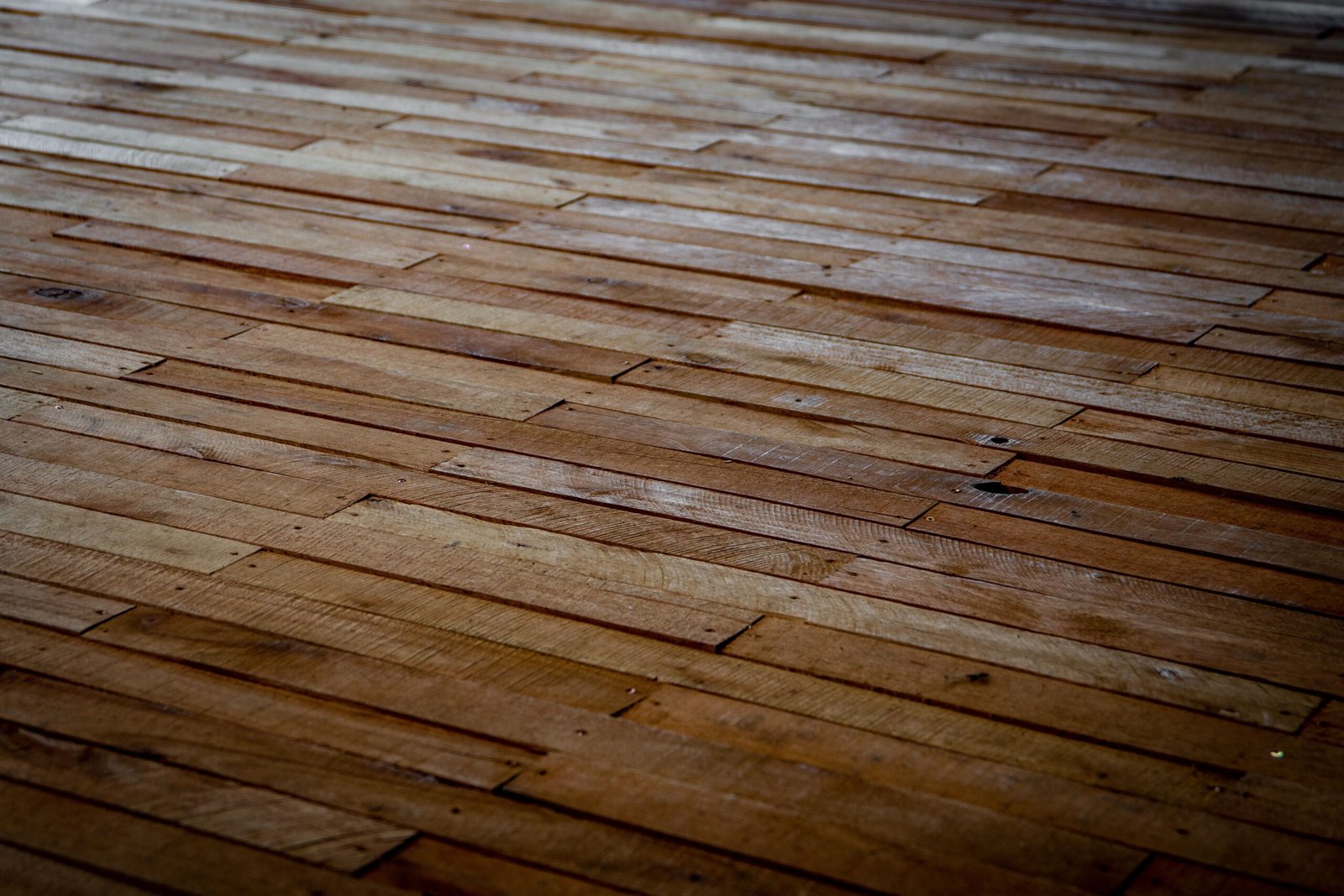
Why Floorboards Start Squeaking
A squeak is a sign of movement. Somewhere underfoot, wood is rubbing against wood or against a loose nail head, and each time you step, that friction creates the noise you hear. Over time, nails work their way slightly out of the joist as timber expands and contracts with humidity changes, leaving the board free to flex up and down as you walk over it. In other cases, two neighbouring boards are simply pressing and rubbing against each other at the edge, particularly during dry spells when timber shrinks slightly.
The reassuring part is that a squeaky floorboard is almost always a minor, easily fixed issue rather than a structural one, and in most cases you do not need to lift the floor to sort it out.
Step 1: Find the Exact Spot
Walk slowly back and forth across the area until you pinpoint precisely where the squeak occurs, and mark the spot with a small piece of masking tape. Getting an accurate location matters, since even a few centimetres out can mean missing the joist entirely when it comes to fixing it.
Step 2: Work Out What Is Causing It
If you have access beneath the floor, such as a basement, cellar, or crawl space, have someone walk on the spot from above while you watch from below to see exactly where the movement is happening. If there is no access underneath, you will be working entirely from above, which is still perfectly manageable using the methods below.
Fixes for Exposed Wooden Floors
Talcum powder or graphite lubricant
If the squeak comes from two boards rubbing against each other rather than a loose nail, a dry lubricant can solve it in minutes. Sprinkle talcum powder or a specialised graphite powder into the gap between the boards, then walk over the area repeatedly to work the powder down into the joint. This reduces friction between the boards and can eliminate the noise without any tools at all. Vacuum up any excess powder once finished.
Screws driven from above
Find the joist beneath the squeaky board using a stud finder, or follow the line of existing nail or screw heads, since these usually mark where the joists run. Drill a small pilot hole through the board at a slight angle into the joist, then drive in a wood screw and countersink it slightly below the surface. Fill the hole with wood filler matched to the floor colour and sand it flush once dry. This pulls the board down tightly against the joist and is one of the most reliable fixes available without lifting anything.
Fixes for Carpeted Floors
Carpet does not need to come up to fix a squeak underneath it. Specialised squeak repair kits are designed exactly for this, using screws with a break-away head that snaps off flush once tightened, leaving nothing visible or sharp poking through the carpet. Locate the joist as above, drive the screw through the carpet and floorboard into the joist until the board pulls down tightly, then snap off the screw head using the tool included with the kit.
Fixes from Underneath, If You Have Access
Where a basement, cellar, or crawl space gives access beneath the floor, a couple of additional options open up. A thin wood shim coated in carpenter’s glue can be gently tapped into the gap between the joist and the subfloor, or between two boards, closing the gap that is causing the movement. Take care not to force it too far, since pushing too hard risks lifting or bowing the floorboard above. Alternatively, driving screws up from below into the underside of the floorboard achieves a similar result to fixing from above, without leaving any visible repair on the finished floor.
What to Avoid
Avoid hammering nails in hard from above on a finished floor, since forceful strikes can damage or crack the surrounding boards. If you are working with screws, use a slow, controlled drill setting rather than forcing them in quickly, and always use screws slightly shorter than the combined depth of the board and joist to avoid them coming through the top of a finished floor.
Frequently Asked Questions
Do I need to lift my floorboards to fix a squeak?
No, in most cases. Talcum powder for board-to-board rubbing, or screws driven carefully from above into the joist, resolve the majority of squeaks without needing to remove any flooring.
Can I fix a squeaky floor under carpet without cutting into it?
Yes. Specialised squeak repair kits use screws that can be driven straight through the carpet and floorboard into the joist, with a break-away head that snaps off flush so nothing is left poking through.
Why does my floor only squeak in certain weather?
Timber naturally expands and contracts with humidity. In drier conditions, boards can shrink slightly and rub against each other, which is why some squeaks come and go depending on the season.
Is a squeaky floor a sign of a structural problem?
Almost always no. Squeaks are typically caused by minor, harmless movement between boards or around loose nails. If the floor also feels bouncy, uneven, or visibly sags, that would be worth having checked by a professional, but this is a separate and much less common issue.
What is the fastest fix for a single squeaky spot?
If the squeak is caused by boards rubbing together, talcum powder worked into the gap is the quickest option and often resolves the noise within minutes with no tools required.
Disclaimer: This article is for general informational purposes only and is not professional advice. Any DIY work described here is carried out entirely at your own risk. For structural, electrical, gas, or other safety-critical work, always consult a qualified tradesperson.