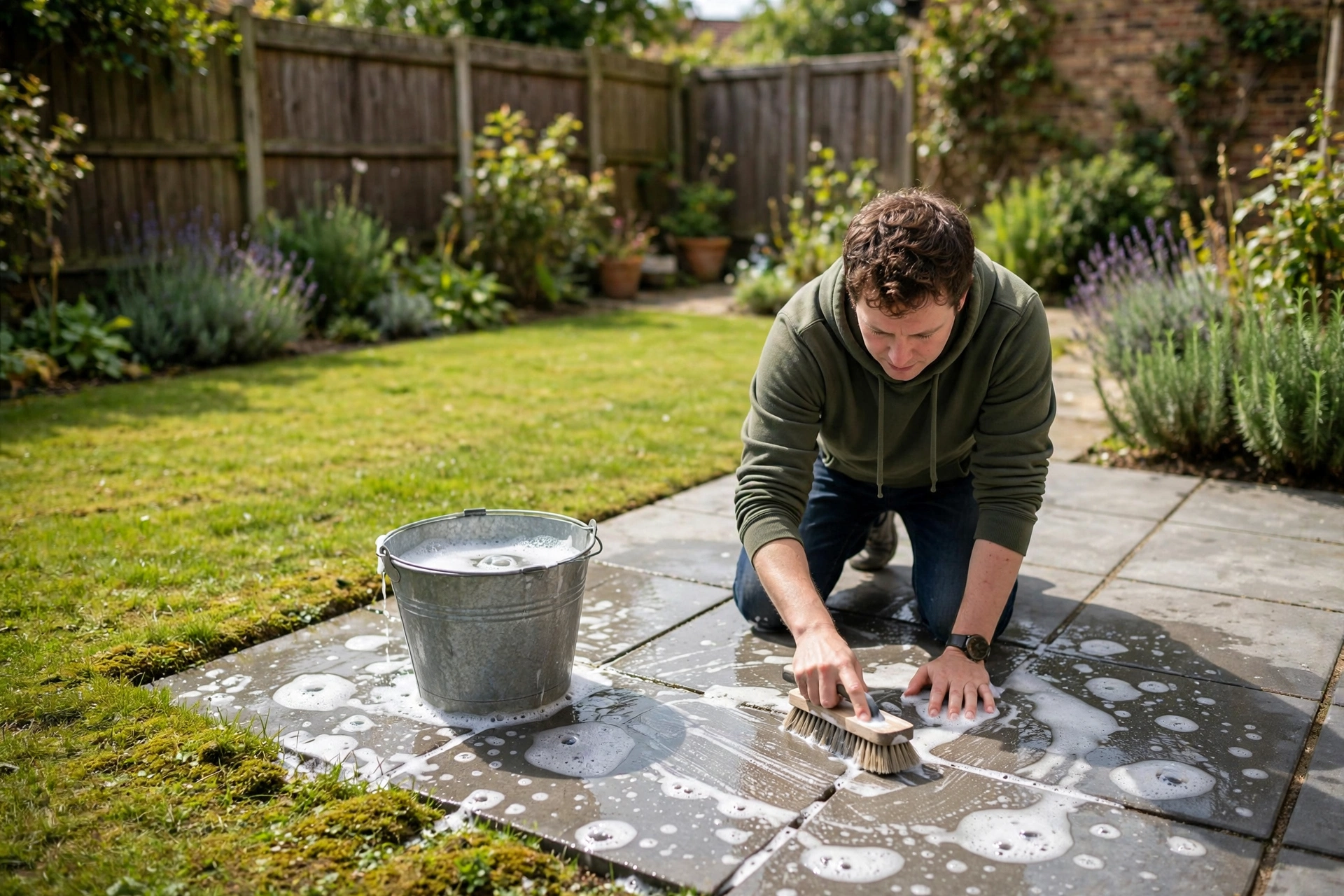
Clean patio slabs without a pressure washer by sweeping them clear, scrubbing with warm soapy water and a stiff brush, then treating stubborn stains with bicarbonate of soda paste or diluted white vinegar. Rinse with a hose or buckets of water. The job takes an afternoon and costs very little.
A pressure washer is fast, but it is not the only way to get a clean patio. High pressure water can blast out the mortar between slabs and leave some surfaces patchy. Hand cleaning is gentler, cheaper and works well on most UK patios. This guide shows you exactly how to do it.
Why Skip the Pressure Washer?
The jet can erode pointing, force water under slabs and etch softer stone. Hiring or buying one costs money too. A brush, a bucket and a little patience give you full control and protect your patio.
What You Will Need
- A stiff yard brush and a smaller hand brush for joints
- A large bucket, warm water and washing-up liquid
- Bicarbonate of soda and white vinegar
- Biological washing powder (for a deep enzyme clean)
- A garden hose or a watering can filled with clean water
- Rubber gloves and protective eyewear
- Old cloths or a sponge, plus a weed puller or an old knife
How to Clean Patio Slabs Without a Pressure Washer
- Clear the patio. Move pots, planters and furniture off the slabs. If your seating is bulky, folding patio furniture makes this job far easier.
- Sweep thoroughly. Use the stiff brush to remove leaves, soil and loose debris. Pay attention to the joints, because trapped dirt feeds moss and weeds.
- Pull weeds from the joints. Remove weeds and loose moss with a weed puller or an old knife. For a chemical-free approach that protects nearby plants, see how to get rid of weeds without chemicals.
- Scrub with warm soapy water. Mix the soapy water recipe from the table below. Scrub one section at a time with the stiff brush, using firm circular motions. This lifts everyday grime on most slab types.
- Treat stains with bicarbonate of soda. Spread the bicarbonate paste from the table below over stained areas. Leave it for 15 to 20 minutes, then scrub and rinse. It works well on food marks, bird droppings and light discolouration.
- Tackle algae and grease with white vinegar. Apply the 1:1 vinegar mix to green or greasy patches, leave for 5 to 10 minutes, scrub firmly and rinse well. Test a hidden corner first, and keep vinegar away from natural stone.
- Rinse and inspect. Rinse each section with clean water from the hose or watering can until no soapy residue remains. Let the patio dry, then check for missed spots and repeat the treatment where needed.
Exact DIY Recipes With Measurements
Four proven mixes. Always test a hidden corner first.
| Recipe | Mix | Dwell time | Best for |
|---|---|---|---|
| Warm soapy water | 15 ml washing-up liquid in 5 litres warm water | Scrub straight away | Everyday dirt, all slab types |
| Bicarbonate paste | 3 tbsp bicarbonate plus a little water | 20 to 30 minutes | Spot stains, food marks, droppings |
| Bicarbonate wash | 1 cup (200 g) in a bucket of warm water | Scrub straight away | General wash, most slabs |
| Vinegar 1:1 | Equal parts white vinegar and water | 5 to 10 minutes | Algae, limescale, grease (not natural stone) |
| Biological washing powder | Half a scoop (35 g) in 5 litres warm water | 30 to 45 minutes | Organic stains, algae, grime |
For heavily soiled patios, a shop-bought patio cleaner saves effort. Choose one marked safe for your slab type and follow the label exactly, including dilution rates and contact times. Wear gloves and keep children and pets away until the area is rinsed.
Slab Material Safety Matrix
Not every cleaner suits every slab. Check this table before you start:
| Slab type | Soapy water | Bicarbonate paste | Vinegar 1:1 | Biological powder | Patio cleaner |
|---|---|---|---|---|---|
| Concrete | Safe | Safe | Safe (rinse well) | Safe | Safe |
| Sandstone | Safe | Safe | Avoid (acid etches) | Test first | Check label |
| Limestone | Safe | Safe | Avoid (acid etches) | Test first | Check label |
| Porcelain | Safe | Safe | Safe | Safe | Safe |
| Block paving | Safe | Safe | Safe (rinse well) | Safe | Safe |
When in doubt, test a hidden corner and check it after 24 hours.
How to Remove Algae and Moss From Patio Slabs
Algae shows as a green, slippery film; moss grows in damp, shady joints. Both make patios unsafe. Brush off loose moss first, then scrub with the vinegar 1:1 recipe or the biological washing powder solution and rinse well. For thick moss, work the hand brush into the joints before treating. Trim overhanging plants for airflow and sweep fallen leaves regularly to slow regrowth.
Stain-by-Stain Troubleshooting
Find your stain below. Work in small areas and rinse well between attempts.
Rust Marks
Usually from metal furniture legs or fertiliser. Apply bicarbonate paste, leave 30 minutes, then scrub firmly. For deep rust on concrete or porcelain, use a shop-bought rust remover marked safe for patios.
Oil and Grease
Blot fresh spills with cat litter or kitchen paper first. Scrub with hot soapy water (double the usual washing-up liquid), then leave the biological washing powder solution on for 45 minutes. Repeat if a shadow remains.
Leaf Tannin Stains
Brown blotches from leaves and berries respond to vinegar 1:1 on concrete, porcelain and block paving (5 to 10 minutes, then scrub). On natural stone, use bicarbonate paste instead, left for 30 minutes.
Bird Droppings
Soften dried droppings with warm soapy water for 10 minutes, then scrub with the hand brush. Follow with bicarbonate paste for 15 minutes on any remaining mark. Clean droppings promptly in future, as the acidity can stain over time.
Black Spot and Lichen
The most stubborn patio stain. Apply bicarbonate paste, leave 45 minutes, scrub hard and rinse. Two treatments are often needed. A dedicated black-spot remover is fastest on large areas; follow the label dwell time.
White Efflorescence
White powdery patches are mineral salts from inside the slabs, not dirt. Brush off dry first. On concrete or porcelain, wipe with vinegar 1:1 and rinse. Never use vinegar on limestone or sandstone; the salts fade with weathering on their own.
How Much Will It Cost, and How Long Will It Take?
| Method | Typical cost | Time for an average patio |
|---|---|---|
| DIY (brush and bucket you own) | Almost nothing | 3 to 6 hours |
| Homemade solutions (bicarb, vinegar, washing powder) | Around £2 to £5 in total | 3 to 6 hours |
| Shop-bought patio cleaner | £5 to £15 per bottle | 2 to 4 hours |
| Professional hand cleaning | From around £8 to £15 per square metre | 1 to 2 hours |
Prices vary by brand, region and patio condition.
Keeping Pets, Children and Plants Safe
Keep pets and children off the patio until it is fully rinsed and dry. Water lawn and plant edges before and after cleaning so any runoff is diluted. Use bicarbonate, soapy water or washing powder near vegetable beds. Wear gloves and eye protection with vinegar or commercial products.
Seasonal Maintenance Calendar
Spring: do the full deep clean above to clear winter grime before algae season.
Summer: sweep weekly, wipe up spills quickly, and trim shrubs so sunlight and air reach the slabs.
Autumn: clear fallen leaves every few days. Top up jointing sand if the joints hollow out.
Winter: keep sweeping so moisture does not sit on the slabs. Avoid rock salt on natural stone.
Check and Repair the Joints After Cleaning
Hand scrubbing loosens joint material over time. Once dry, check for hollowed sand and cracked mortar. Brush kiln-dried sand into the joints, or repoint cracked mortar before water gets under the slabs. Only seal on a fully dry surface in settled weather.
Once the slabs look fresh, finish the job properly and clean your windows so the whole outdoor space feels renewed.
Frequently Asked Questions
Can I clean patio slabs with just washing-up liquid and water?
Yes, for light dirt and general grime. Stubborn stains, algae and moss need a stronger treatment too.
Will white vinegar damage my patio slabs?
On concrete and porcelain it is usually fine. On limestone, sandstone or marble it can mark the surface permanently.
How do I clean patio slabs without a hose?
Use buckets and a watering can to rinse each section. Work in small areas so soapy water does not dry before rinsing.
How long will it take to clean my patio by hand?
Around 3 to 6 hours by hand for an average 20 square metre patio, including treatments and rinsing. Treat the worst stains first so you can judge your pace.
Why is my patio still green after cleaning?
Algae survived in the pores or joints. Reapply, scrub the joints, and let the slabs dry in sunlight. A second pass usually finishes the job.
How often should I clean my patio?
Deep clean once a year in spring and sweep regularly through autumn and winter.
What is the black stuff on my patio slabs?
Usually black spot lichen or algae. Scrub with bicarbonate paste or a patio cleaner, leave it to work, then scrub again and rinse. Deep lichen may need two treatments.
Can I use bleach on patio slabs?
You can, but it is risky. Bleach can discolour slabs, kill plants and harm lawn edges. Bicarbonate of soda or a purpose-made patio cleaner gives safer results.
Conclusion
Cleaning patio slabs without a pressure washer takes a little more effort, but it protects your pointing, suits every slab type and costs very little. Sweep, scrub, treat the stubborn spots and rinse well, once a year to keep the job easy.