
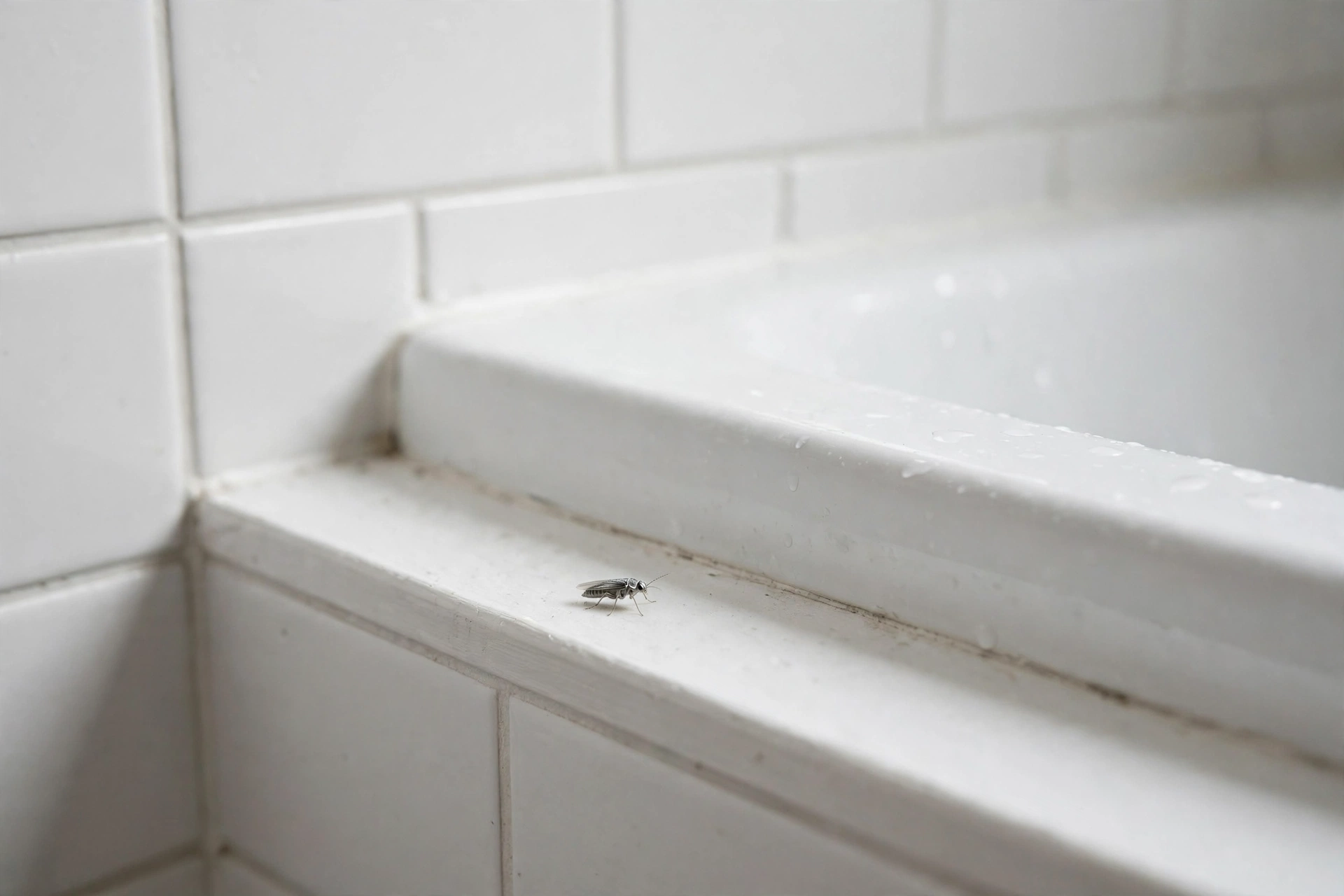
Finding a silvery insect darting across the bathroom floor is never pleasant. The good news is that you can deal with it yourself in most cases. To get rid of silverfish in the bathroom, reduce moisture with better ventilation, remove their food sources such as paper and cardboard, seal cracks around pipes and skirting boards, trap the visible ones, and apply food-grade diatomaceous earth in dry hiding spots for lasting results. The single most important step is fixing the damp conditions they need, because silverfish cannot thrive in a dry bathroom.
They damage wallpaper, books and natural fabrics, so act early. This guide gives you an ordered plan, an inspection checklist and a monitoring method, plus prevention so they do not come back.
What are silverfish and why are they in your bathroom?
Silverfish are small, wingless insects with a silvery grey, fish-like body. They are nocturnal, so you usually spot them when you switch the bathroom light on at night. Adults are roughly a centimetre long.
They feed on starches and sugars: wallpaper paste, book bindings, cardboard, cotton towels and soap residue. Bathrooms suit them because they are often warm, dark and damp.
What attracts silverfish to bathrooms?
The main attractants are high humidity, leaks from dripping taps or damaged grout, food such as cardboard, and hiding places like gaps behind the toilet. Regular sightings signal excess moisture. Fix the moisture and you solve both problems at once.
Start with a bathroom inspection
Before treating anything, do a room walkthrough with a torch. Every damp patch or gap you find becomes a target in your action plan.
- Behind the toilet. Check the cistern, pipework and floor for damp or shed skins.
- Under the bath. Remove the bath panel and shine your torch into the void. A favourite hiding spot.
- Inside the vanity unit. Pull everything out and check the back panel and corners.
- Around pipe boxing. Look for gaps where pipes enter walls and any slow leaks.
- Loose tiles and skirting boards. Press gently to find movement, gaps or crumbling grout.
- Window and extractor fan. Check for condensation damage and confirm the fan works.
Silverfish and drains: settling a common myth
Some advice says to pour boiling water down the drain. The truth: silverfish do not live inside drains. They live in the damp spaces around them.
What attracts them is moisture and the slimy residue around plugholes, overflow holes and waste pipe seals. Boiling water might kill one insect it touches, but it does nothing about the ones behind the bath panel. Instead, clean the trap and seals. Remove hair and soap residue from plugholes, scrub the overflow hole, and check the silicone around the basin and bath. Dry, sealed and clean beats boiling water every time.
Your 6-week silverfish action plan
Silverfish breed slowly and eggs take weeks to hatch, which is why one weekend of effort rarely finishes the job. Work through this plan in order.
Day 1: deep clean, cut the moisture, set traps
- Run the extractor fan during and for at least 20 minutes after every shower or bath. Open a window when you can.
- Wipe down wet tiles and the shower screen. Fix dripping taps. Check under the sink and behind the toilet for slow leaks.
- Vacuum behind the toilet, under the bath panel and along skirting boards.
- Remove cardboard, paper bags and magazine piles from the bathroom. Store towels and toilet rolls in closed cupboards.
- Set traps tonight: wrap masking tape around a glass jar, add bread inside, and place it where you have seen them. Also place sticky traps behind the toilet and under the bath panel.
- If damp has already left its mark, our guide on how to remove mould from a bathroom ceiling will help you clean it up safely.
Week 1: seal entry points and treat
- Seal pipe entry points, the bath edge and skirting-to-floor joints with silicone. Repair cracked grout.
- Dust a thin layer of food-grade diatomaceous earth into dry cracks, behind the toilet and along skirting boards. Wear a dust mask, keep children and pets out until the dust settles, and never apply it to wet areas.
- Add natural repellents as a supplement: cedar blocks, lavender oil on cotton balls in cupboards, and cinnamon sticks near entry points.
Weeks 2 to 6: monitor and repeat
- Check sticky traps weekly and note the catch count (see below).
- Repeat the jar trap several nights each week. Reapply diatomaceous earth after deep cleaning.
- Keep the ventilation habits going. This is the step most people drop too early.
Track your progress with sticky traps
Sticky traps do more than catch silverfish. They tell you how bad the problem is and whether your plan is working. Place them behind the toilet, under the bath panel and inside the vanity unit, and check them once a week.
One or two a week means a light problem that home treatment should clear. Several every night means a larger population, probably with a hidden moisture source. Numbers should fall steadily. If you are still catching several a day after four weeks, call a professional rather than repeat the same steps.
Keeping children and pets safe
- Diatomaceous earth: use food-grade only. Never use pool-grade indoors: it contains crystalline silica, which is harmful to breathe. Keep children and pets out until the dust has settled.
- Boric acid: effective, but keep it well away from children and pets. Apply it only deep in cracks and voids they cannot reach, never on open surfaces.
- Essential oils: lavender, cedar and citrus oils are popular repellents, but some are toxic to cats. If you have a cat, skip the oils or check with your vet first.
- Sprays: follow the label directions exactly. Ventilate the room, keep children and pets away until treated areas are fully dry, and never spray near towels, toiletries or pet bowls.
UK bathroom specifics worth knowing
- Extractor fan overrun: your fan should keep running for 15 to 20 minutes after a shower. Many UK fans have an overrun timer. Check yours is set correctly.
- Windowless bathrooms: common in UK flats, these rely entirely on the fan. A weak or broken fan is the first thing to fix.
- Heated towel rails: these warm the room and dry towels faster, which lowers humidity. Keep yours on during the colder months.
- Trickle vents: if your windows have them, keep them open for background ventilation overnight.
- Professional costs: a typical one-off silverfish treatment in the UK costs roughly £60 to £120, though prices vary. Ask whether a follow-up visit is included.
Prevention: your monthly and quarterly checklist
Monthly: deep clean behind the toilet and under the bath panel. Leave a jar trap out for a few nights to monitor. Check under the sink for leaks or damp.
Quarterly: test the extractor fan and clean its cover. Inspect silicone sealant around the bath, basin and shower, and reseal any gaps. Check grout lines and repair cracks. Declutter cupboards and keep paper and cardboard out of the bathroom. Note any new trap activity.
Should you use chemical insecticide sprays?
In most cases you do not need them. The plan above deals with the cause rather than just the symptom. If nothing else has worked, choose a product labelled for crawling insects, read the label fully, ventilate the room, and keep children and pets away until treated areas are dry. See the safety section above first.
Frequently asked questions
Do silverfish bite humans or pets?
No. They do not bite and they do not spread disease. They are a nuisance because they damage paper, wallpaper and natural fabrics.
Does seeing silverfish mean my home is dirty?
No. Even a spotless bathroom can host silverfish if it stays damp. Fix the ventilation and the problem usually follows.
Where do silverfish hide in the bathroom?
Behind the toilet cistern, under the bath, inside wall voids around pipes, under loose skirting boards and in cluttered cupboards. Work through the inspection checklist above to find yours.
How long does it take to get rid of silverfish?
Expect improvement within two to three weeks, but allow the full six weeks. Eggs hatch over several weeks, so stopping early is the most common reason they come back.
Can I ignore a single silverfish?
No. One means conditions suit them, and more are usually hiding nearby. Treat it as an early warning.
Do silverfish damage bathrooms?
They can damage wallpaper by eating the paste underneath, which loosens it from the wall. They do not eat grout or silicone sealant, but they hide in the gaps behind failing sealant, so damaged sealant is still worth fixing.
Will silverfish spread to other rooms?
They can, travelling through wall voids and along pipework. The same fix works everywhere: dry conditions, sealed gaps and no food sources.
When should I call a pest controller?
If you are still catching several a day after four weeks, if they are spreading to other rooms, or if you cannot find the moisture source. A persistent problem can point to a hidden leak.
Final thoughts
Silverfish are a moisture problem first and a pest problem second. Inspect the room, follow the 6-week plan, track your traps and keep up the prevention checklist. If other household pests are troubling you too, our guide on how to get rid of fruit flies in the kitchen uses the same remove-the-cause approach.