How to Make a Reed Diffuser Smell Stronger
Quick answer: To make a reed diffuser smell stronger, use the full set of reeds, flip them an hour or so before you want the boost, move the diffuser into gentle moving air at about waist height, and give it a smaller space to scent. If it is still faint after all that, with fresh reeds in a small room, the oil or the diffuser itself is the limit, and no amount of flipping will fix it. Stronger always costs lifespan, so use the boosts below on purpose, not all at once, every day.
A reed diffuser is a quiet product. It does not throw scent across a room the way a lit candle does. It releases fragrance slowly, all day, from the surface of its reeds. That is its charm, and also its frustration. When a diffuser smells too weak, the answer is rarely to buy a bigger one straight away. In most cases, a few small changes to reeds, placement and room size will make a real difference. Work through them in order, from the easiest fix to the more drastic ones.
Before You Boost Anything: Check It Is Not Your Nose
Before changing anything, run the simple test from our guide to why you can’t smell your reed diffuser. Flip the reeds once, step outside for ten to fifteen minutes, then walk back into the room and breathe in as you enter. If the scent greets you at the door, your diffuser is working fine and your nose had simply adapted to a constant background smell. Guests always notice a home scent more than the person who lives with it.
If you come back in and there is still almost nothing, the diffuser really is weak, and the steps below will help. This check matters because boosting a diffuser that is already working well will only empty the bottle faster and may make the room overpowering for everyone else.
1. Add Reeds, and Accept the Lifespan Cost
This is the single most effective way to strengthen a diffuser, and it works because of simple surface area. Each reed draws oil up and releases fragrance from its whole length. Four reeds release roughly half the fragrance of eight reeds. A small bathroom may only need four or five reeds, but a living room usually needs the full set the diffuser came with, often eight to ten.
If your diffuser has been running with only half its reeds, add the rest now. If it already has the full set, adding extra reeds from another diffuser is possible, but check the bottle neck first. Reeds crammed so tightly that air cannot move between them will not diffuse well, and they can make the bottle top-heavy and easy to knock over.
Be honest about the trade-off. More reeds mean a stronger smell and a shorter life. Our guide to how long do reed diffusers last sets out the maths: a 100ml diffuser that would last six weeks to three months with normal use will finish noticeably sooner if you run it at full strength all the time. That is not a fault. It is the price of a stronger scent. Use the full set when you need it, and take two reeds out again when the room smells right, rather than running at maximum for months.
2. Flip With Intent, Not Out of Habit
Flipping the reeds, turning them so the oil-soaked ends face up, gives an immediate burst of fragrance. It is the fastest boost in this guide, and the easiest to overuse.
Flip over a sink or on a tissue, because the oil-soaked ends can stain wood and fabric. Wipe the bottle neck before you put the reeds back, and wash your hands afterwards. Diffuser oil can damage polished surfaces and some plastics, so never flip reeds over a wooden table without protection.
For a planned boost, flip about an hour before guests arrive, or when you first come home in the evening. That timing gives the burst time to fill the room without fading before anyone notices it. For everyday use, flipping once a week keeps the scent steady. Flipping every day will give you a stronger home for a shorter time, and it may cut a bottle’s life by a noticeable margin.
If flipping stops making any difference at all, the reeds are clogged and need replacing, not more flipping. Dust and dried fragrance oil block the tiny channels inside rattan reeds over weeks, and no amount of turning will revive them. Fit a fresh set, and the scent usually returns straight away.
3. Move It Into Moving Air
A reed diffuser does not project scent. It relies on gentle air movement to carry fragrance off the reeds and around the room. Where you put it decides whether it works, and this is the fix most people miss.
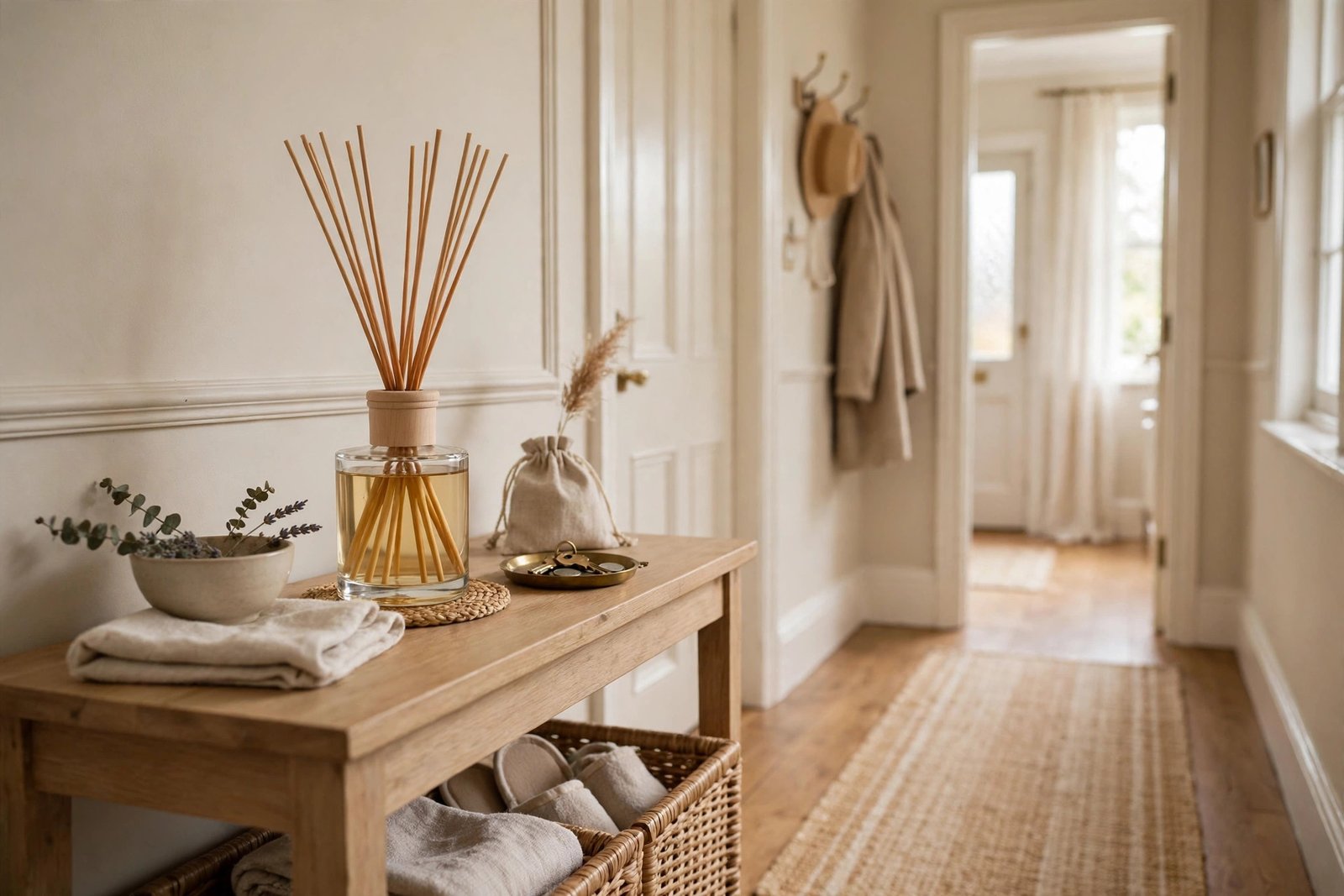
The best spots are places air passes through naturally: a hallway console you walk past, a shelf near a doorway, or a side table in the path between rooms. Passing traffic stirs the air just enough to spread the scent. That is why hallway diffusers often seem to smell stronger than lounge ones, even when both are the same product.
Height matters too. Put the diffuser at about waist height, on a console or sideboard, rather than on the floor or on top of a tall bookcase. Fragrance rises gently as it warms, and a diffuser at waist height puts the scent where people actually breathe and walk through it.
Avoid the two extremes. Dead air is the first: a diffuser tucked behind a door, inside a bookcase, or in a corner where air never moves will scent only the space immediately around itself. Strong draughts are the second: a diffuser beside an open window, a fan, or an air vent loses its scent straight outside and empties fast. You want a gentle flow through the room, not a wind tunnel and not a still corner.
4. Warmth Without Sunlight
A little warmth speeds up evaporation and strengthens the scent. Too much warmth burns through the bottle in weeks and leaves the remaining oil smelling thin. The trick is gentle, indirect warmth, never direct heat.
A diffuser in a comfortably warm room will smell stronger than the same diffuser in a cold spare room. That is normal, and it is one reason diffusers seem to fade in winter in unheated rooms. Moving the diffuser from a cold hallway into a lived-in, heated room is a legitimate boost.
What you must not do is chase warmth with sunlight or radiators. A diffuser on a sunny windowsill or above a radiator evaporates far too quickly. The oil races up the reeds, the scent peaks for a fortnight and then fades, and the reeds clog faster in the heat. Keep the diffuser out of direct sun and away from radiators, even when you want a stronger scent. Warmth from the room itself is enough.
5. Shrink the Space It Scents
One standard 100ml diffuser is built for a small to average room. In a large open-plan kitchen and living space, it will scent the area around it and not much more. No number of extra reeds will make one small bottle fill a very large space well.
Shrink the space instead. Close the doors to the room for an hour before guests arrive, so the fragrance builds up rather than drifting through the whole house. Move the diffuser closer to where people sit, rather than leaving it in a far corner. In an open-plan home, place a second diffuser at the opposite end of the space, so each one scents its own zone, rather than expecting one bottle to do the whole job.
This also works in reverse for small rooms. A bathroom or cloakroom needs only four or five reeds, and a full set in such a small space can quickly become overpowering. Match the diffuser to the room, and the scent will feel stronger because it is concentrated where it belongs.
6. Choose a Heavier Scent Next Time
Some fragrances are simply light. Citrus and fresh green scents are made from smaller, brighter molecules that evaporate quickly and sit softly in a room. Woody, amber, spiced and sweet gourmand scents are heavier, linger longer, and read as stronger in the same room, even at the same reed count.
If your diffuser is a light citrus scent in a large room, the steps above will help, but they cannot turn a light scent into a heavy one. When you next buy or refill, choose a heavier scent family for large or open rooms, and save light, fresh scents for small rooms where they can shine without being stretched thin. Two diffusers of the same size, one lemon and one sandalwood, will not perform the same way, and neither is faulty. They are simply different chemistry.
Check the oil itself as well. Fragrance oil that has been open for many months, especially in a warm or bright room, gradually loses strength. If the bottle is old and the oil smells sharp or different from how it started, a fresh refill with new reeds will do more than any placement trick.
7. When Stronger Means a Different Product
There is a ceiling on what placement and flipping can rescue, and it is worth recognising it rather than fighting it for weeks. Test the diffuser honestly: put it in your smallest room, the bathroom, with the door closed for an hour, using fresh reeds. If it cannot scent a small closed room, the product is the problem. Very cheap diffusers sometimes skimp on fragrance content or use reeds that clog within a fortnight, and a better diffuser will save you weeks of fiddling.
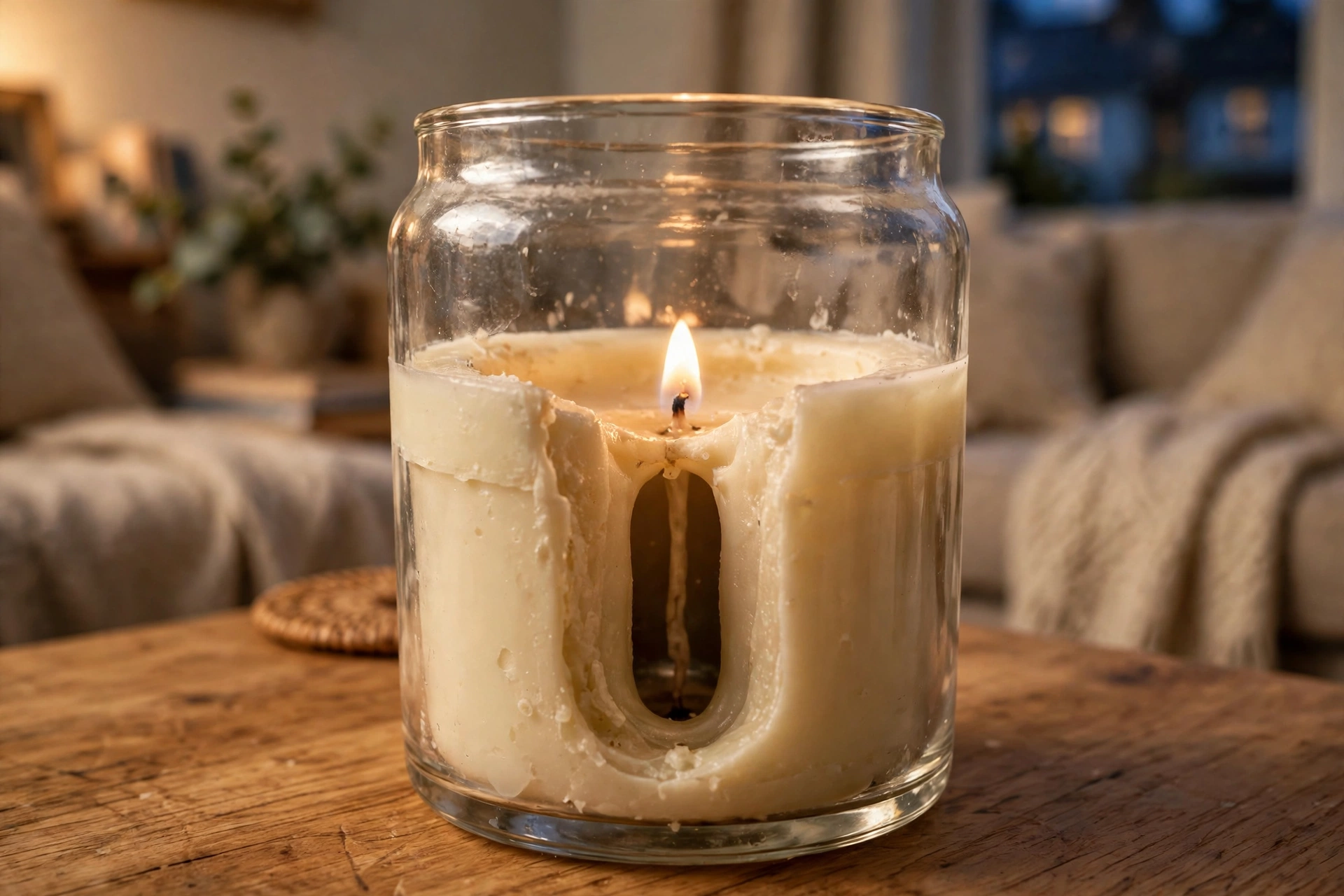
The same logic applies to format. A reed diffuser gives steady background scent. It will never give the strong burst of a lit candle for an evening, and that is not a failure. If you want a powerful scent for a dinner party or a cosy evening, a candle is the right tool for that hour, and the diffuser is the right tool for the rest of the week. Our guide to candle tunnelling explains how to keep a candle burning well if you go down that route, but do not judge a diffuser by candle standards.
Replace, rather than revive, when the reeds have been replaced and still smell of nothing close up, when the oil is low and the diffuser is more than a few months old, or when the bottle has spent most of its life in strong heat or sunlight. A diffuser is finished when the oil is gone or the scent has gone stale. Treating reeds and oil as consumables, rather than permanent fixtures, is the whole secret to a home that always smells faintly lovely.
Too Strong? Turning It Down Again
Boosting works both ways, and it is useful to know how to reverse it, because a diffuser that was perfect in a small flat can become overwhelming in a smaller room, or after you add the full set of reeds.
Take two reeds out and store them upright in a small glass, so you can add them back later. Move the diffuser to a stiller corner, away from doorways and passing traffic. Close the bottle for a day by removing the reeds and replacing the stopper, if your diffuser came with one, to let the room clear. Do not try to dilute the oil with water. Water does not mix with diffuser base, it can warp natural rattan reeds so their channels swell shut, and it turns a strong diffuser into a dead one.
If a room smells too strong for a guest with asthma or allergies, or around pets, move the diffuser out of that room entirely rather than trying to tune it down in place. A faint background scent in the hallway is kinder than a strong scent in a room someone cannot leave.
The Boost Routine That Actually Works
Put the steps together and the routine is simple, and it costs nothing:
- Run the nose test first. Step outside for ten minutes and come back in. If you can smell it, it is working.
- Use the full set of reeds for the room size. Four or five for a small room, eight to ten for a living room.
- Flip with intent. Once a week as routine, plus an extra flip an hour before guests arrive.
- Place it in gentle moving air at waist height. A hallway console or a shelf near a doorway, never behind a door or in a draught.
- Keep it warm, not hot. A lived-in room, out of direct sun and away from radiators.
- Shrink the space. Close doors to let the scent build, and add a second diffuser for open-plan rooms instead of overworking one bottle.
- Replace reeds and oil on time. Fresh reeds with every refill, and a fresh bottle when the scent has gone stale.
Follow that order and you will know, within a day, whether your diffuser needed a boost or a replacement. Most of the time, it needed a boost, and the boost was already in your hands.
Frequently Asked Questions
How can I make my reed diffuser smell stronger quickly?
Flip the reeds over a sink, add reeds up to the full set, and move the diffuser into gentle moving air at waist height. You should notice a difference within an hour. For guests, flip about an hour before they arrive, not five minutes before.
Does flipping reed diffuser sticks every day make it stronger?
Yes, but only for a short time, and it uses the oil faster. Daily flipping can cut a bottle’s life noticeably. Flip weekly as routine, and save extra flips for occasions when you want a burst.
How many reeds should I use for a strong scent?
Use the full set the diffuser came with, usually eight to ten, for a living room or open space. Use four or five for a small bathroom. More reeds mean a stronger scent and a shorter bottle life, so remove two again once the room smells right.
Why is my reed diffuser still weak after adding more reeds?
Check the reeds themselves first. If they are old and clogged, new reeds will help more than extra old ones. Then check placement and room size. If it is still weak in a small closed room with fresh reeds, the oil may be stale or the product itself may be the limit.
Can I add essential oil to make a reed diffuser stronger?
Adding neat essential oil is not recommended. It can change how the base climbs the reeds, it may not mix properly, and strong undiluted oils can damage surfaces and irritate skin. A proper refill oil, paired with fresh reeds, is the safer way to refresh a diffuser.
Does a reed diffuser smell stronger in a warm room?
Yes, gentle warmth speeds up evaporation, so a diffuser in a heated living room smells stronger than one in a cold spare room. Avoid direct sun and radiators, though, because strong heat empties the bottle fast and fades the scent.
How do I make a reed diffuser less strong?
Remove two reeds, move it to a stiller corner away from doorways, and keep doors open so the scent disperses. Never add water to dilute the oil, as it does not mix with the base and can ruin the reeds.
Stronger Is a Setting, Not a Mystery
A reed diffuser does not have a volume dial, but it does have settings you control: how many reeds are working, how often they are flipped, where the diffuser sits, how warm the room is, and how much space it has to fill. Turn those settings up together, on purpose, and a faint diffuser usually becomes a pleasant one. When none of them work, even in a small room with fresh reeds, trust the test and replace the diffuser, rather than spending another month flipping reeds that have nothing left to give.