Quick answer: A scented candle is wax, fragrance oil and a wick working together, and how well it performs depends on all three plus how you burn it. Soy wax burns cleanly and gently, paraffin throws the strongest scent, beeswax is the premium natural option, and blends sit in between. Choose the size for the room it will burn in, give every new candle a full first burn of two to four hours, trim the wick to about 5mm before each burn, keep sessions under four hours, and never leave a candle burning unattended. This guide explains each part of that system, so you can buy well and burn well.
Walk into any UK homeware shop and you will find a wall of scented candles: small tins, tall glass jars, three-wick bowls, Christmas spices, spring florals, and prices from a few pounds to more than fifty. They all look simple. A candle is, after all, one of the oldest products in the home. But a scented candle that actually fills a room with scent, burns evenly to the bottom of the jar and lasts as long as it should is the result of several small decisions, made by the maker and by you, working together.
This guide is written for buyers, not makers. It covers the whole system in one place: what a scented candle is made of, how each wax behaves, what the wick does, how scent throw really works, how to match a candle to a room, how to burn it properly, how to store it, and how to stay safe. The detail on fixing problems lives on the cluster pages this guide links to. If you only read one page about scented candles, this is the one to read first, and it will tell you where to go next.
What a Scented Candle Is Made Of
Every scented candle, whatever the price or the jar, is made of three things: wax, fragrance and a wick. The wax is the fuel. The fragrance oil is the scent. The wick is the engine that melts the wax and carries the scent into the room. If any one of the three is wrong for the job, the candle underperforms, and no amount of careful burning will fully fix it.
The wax holds the fragrance oil in suspension while the candle is solid, then releases it as it melts. Different waxes hold and release fragrance differently, which is why two candles with the same scent name can smell very different when lit. The fragrance oil itself is a blend of scent compounds, chosen to survive the heat of a flame and to release steadily from warm wax. Some are made for a strong scent at room temperature, which helps a candle sell in a shop, and some are made for a steady release once burning, which is what you actually live with. The wick draws liquid wax up by capillary action and burns it, keeping a pool of warm wax, the melt pool, at the right temperature. The size of that melt pool decides how much scent reaches the room.
That is the whole system. Wax, fragrance, wick, melt pool, room. Everything in this guide is one of those five things, explained in enough detail to buy and burn with confidence.
The Waxes Compared: Soy, Paraffin, Beeswax and Blends
Wax is the first choice a maker makes, and it shapes everything else about the candle. Most UK candles you will meet use one of three waxes, or a blend of them. None of them is the best at everything, and the honest way to choose is to match the wax to what matters most to you: strength of scent, clean burning, cost, or natural ingredients.
| Wax | Scent throw | Burn | Soot | Cost in the UK | Best for |
|---|---|---|---|---|---|
| Soy | Gentle to good | Slow, clean, even | Low | Mid range | Everyday burning, bedrooms, buyers who want a plant-based wax |
| Paraffin | Strongest | Fast, even, reliable | Higher if the wick is long | Lowest | Large rooms, buyers who want the strongest scent |
| Beeswax | Moderate, with its own honey scent | Slow, steady | Low | Highest | Natural-ingredient buyers, small rooms, a warm honey note |
| Coconut or blended wax | Good, between soy and paraffin | Clean, even | Low | Mid to high | Buyers who want a clean burn with a stronger throw than pure soy |
Soy wax is the most common choice among small UK makers, and for good reason. It is made from soybeans, so it is plant based and renewable. It burns slowly and cleanly, which means a soy candle usually lasts longer than a paraffin candle of the same size, and it produces very little soot when the wick is trimmed. Its weakness is throw. Soy releases fragrance more gently than paraffin, so a soy candle can smell lovely in the jar and disappointingly faint in a large room. Soy also needs the longest curing time after pouring, around two weeks, before it is at its best, so a soy candle burned the day it arrives may still be improving.
Paraffin wax is the traditional candle wax, made from petroleum. It is the cheapest wax, the easiest to work with, and the strongest on throw. Paraffin holds fragrance well and releases it readily from a hot melt pool, so a paraffin candle of the same size will usually scent a room more strongly than a soy one. Its drawbacks are that it can soot more than other waxes if the wick is left long, and some buyers prefer to avoid a petroleum product for environmental reasons. If strong scent is your top priority, paraffin is still the wax that delivers it most reliably.
Beeswax is the oldest candle wax and the most expensive. It has a natural honey scent of its own, which is lovely but can compete with the added fragrance, so a beeswax candle rarely gives you a clean, specific scent such as a single floral or a single citrus. It burns slowly and steadily with very little soot, and many buyers choose it because it is a natural, minimally processed wax. It is rarely the best choice if you want a strong, specific fragrance in a large room.
Coconut wax and blended waxes are increasingly common. Coconut wax burns cleanly and throws better than pure soy, so makers often blend it with soy to get a clean burn with a stronger scent release. A blend is not a warning sign. Many of the best-throwing candles on the market are blends, and a good blend will usually say so on the label. If a listing says “soy and coconut wax blend”, that is a maker telling you something useful about how the candle will perform.
The full neutral comparison, including burn times, cleaning, environmental claims and pet considerations, is a separate guide on soy, paraffin and beeswax. This table is the short version: enough to choose, with the depth kept where it belongs.
The Wick: Small Part, Big Job
The wick controls the melt pool, and the melt pool controls the throw, so the wick matters far more than its size suggests. A wick that is too small for the container will not melt the wax out to the edges. The melt pool stays small, the candle tunnels, and the throw stays weak. A wick that is too large will burn too hot, melt the wax too fast, and destroy the fragrance in the heat, so the candle smells strong for a few minutes and then fades.
Most UK candles use cotton wicks, made from braided cotton fibre, sometimes with a paper core to keep them upright. Cotton wicks are the standard, and a well-sized cotton wick gives a steady, even burn. Wooden wicks are the other common choice. They are thin strips of wood, usually cedar, that crackle gently as they burn, which many buyers enjoy. A wooden wick needs a wider melt pool to stay lit, so it suits larger containers, and it needs trimming too, though you snap or trim the charred wood rather than cutting it like cotton.
You can spot a wick problem by watching the candle burn. If the melt pool never reaches the edges after two or three hours, the wick is probably too small. If the flame is tall, flickering and smoking, and the wax is disappearing quickly with little scent to show for it, the wick is probably too large. If the wick keeps drowning in its own melt pool and going out, it may be too short, or the wax may be too soft for the wick size.
There is one safety point worth knowing about wicks. Lead-core wicks, which were once common because the lead kept the wick upright, have not been used by UK makers since the 1970s, but cheap imported candles may still use them. A lead-core wick is a reason not to buy a candle, however cheap it is. A reputable UK maker will use cotton or wood, and will say so if you ask.
As a buyer, there is not much you can do to fix a wrong wick, because the wick is set when the candle is made. Trimming it to about 5mm before each burn helps a wick that is too long, and it is a habit worth keeping for every candle. But if the wick is the wrong size for the jar, the candle will never throw at its best, and the honest answer is to note the maker and choose differently next time.
Hot Throw and Cold Throw: The Two Scents of Every Candle
Before you judge any candle, it helps to know that it has two different scents, and they are often very different from each other.
Cold throw is what you smell when you sniff the unlit candle. It is the scent that rises off the surface of the solid wax at room temperature. Many candles smell strong in the jar, and that is by design. Makers know you will sniff before you buy, and a strong cold throw sells candles.
Hot throw is what you smell once the candle is burning. It is the scent released from the warm liquid wax in the melt pool, carried into the room on the warm air rising from the flame. Hot throw is the scent you actually live with, and it is the one that matters. A candle can have a powerful cold throw and a weak hot throw, and that gap is the single most common reason people feel cheated by a candle.
The reason the two throws differ is simple. Some fragrance oils are made to smell strong at room temperature but are too volatile to survive the heat of a flame. They flash off quickly or break down in the hot wax, so the scent fades within minutes of lighting. Other fragrance oils are made for hot throw. They release steadily from warm wax and keep going for the whole burn. The wax matters too. Soy wax often smells lovely unlit but throws more gently once burning, while paraffin wax usually throws more strongly. None of this is visible from the jar, which is why the sniff test in a shop tells you so little about how a candle will perform at home.
So the first rule of buying candles is to stop judging them by sniffing the jar. Judge a candle by how it performs after a proper burn, in the right room, for long enough. If it still smells weak after that, our guide on why is my candle not smelling strong works through the causes in order, from the melt pool to the fragrance load inside the candle.
Fragrance Families: Choosing a Scent for a Room
Scented candles are sold by scent name, but the names tell you very little. “Winter Walk”, “Sunday Morning” and “No. 4” could be anything. What matters is the fragrance family underneath the name, because families behave differently in different rooms.
The four families you will meet most often in UK candle guides are floral, citrus and fresh, woody, and spicy or oriental. Floral scents, such as lavender, rose and jasmine, suit bedrooms and living rooms, where a soft, welcoming scent works best. Citrus and fresh scents, such as lemon, bergamot and green herbs, suit kitchens and bathrooms, where they read as clean and cut through cooking smells. Woody scents, such as cedar, sandalwood and vetiver, suit living rooms and studies, where a warm, grounded scent fits the furniture and the mood. Spicy and oriental scents, such as cinnamon, clove, amber and vanilla, suit autumn and winter evenings, when a rich, cosy scent matches the season.
Two practical rules follow from that. First, match the family to the room, not to the prettiest name. A heavy spicy candle in a small bathroom will overwhelm the room, while a light citrus candle in a large living room will disappear. Second, do not mix families that fight each other in the same space. One family per room, or one family across the home with different expressions of it, is the rule that keeps a home smelling deliberate rather than confused.
There is one more thing to know about fragrance before you buy. Fragrance oils made for candles are designed to survive heat and release steadily from warm wax. Essential oils, by contrast, are volatile. They evaporate quickly and break down under heat, so a candle made with essential oils will often smell lovely unlit and weak once burning. If a candle is sold as made with pure essential oils, expect a gentler throw, and do not pay a premium for strength it cannot deliver.
Size to Room: Matching the Candle to the Space
Scent throw is a matter of scale. A candle releases a fixed amount of fragrance, and the bigger the space, the thinner that fragrance spreads. A small candle that fills a bathroom with scent will barely register in a large open-plan living room. Buying the right size for the room is the single most useful thing you can do before you spend any money.
As a rough guide, a small candle of about 100g to 150g suits a small room such as a bathroom or a small bedroom. A standard candle of about 180g to 220g suits an average living room or a medium bedroom. A large open-plan space, a room with high ceilings or a room with the doors open to a hallway will usually need a large candle of 300g or more, or two standard candles burning at opposite ends of the room.
UK homes make this harder than it looks. Many British living rooms are open plan, or open onto a kitchen or a hallway, so the scent has far more air to fill than the room you are sitting in. High ceilings in Victorian and Edwardian houses have the same effect. The warm scented air rises and pools near the ceiling, well above nose height. A candle that would scent a modern flat beautifully can seem almost scentless in a tall Victorian living room, and the candle is not at fault.
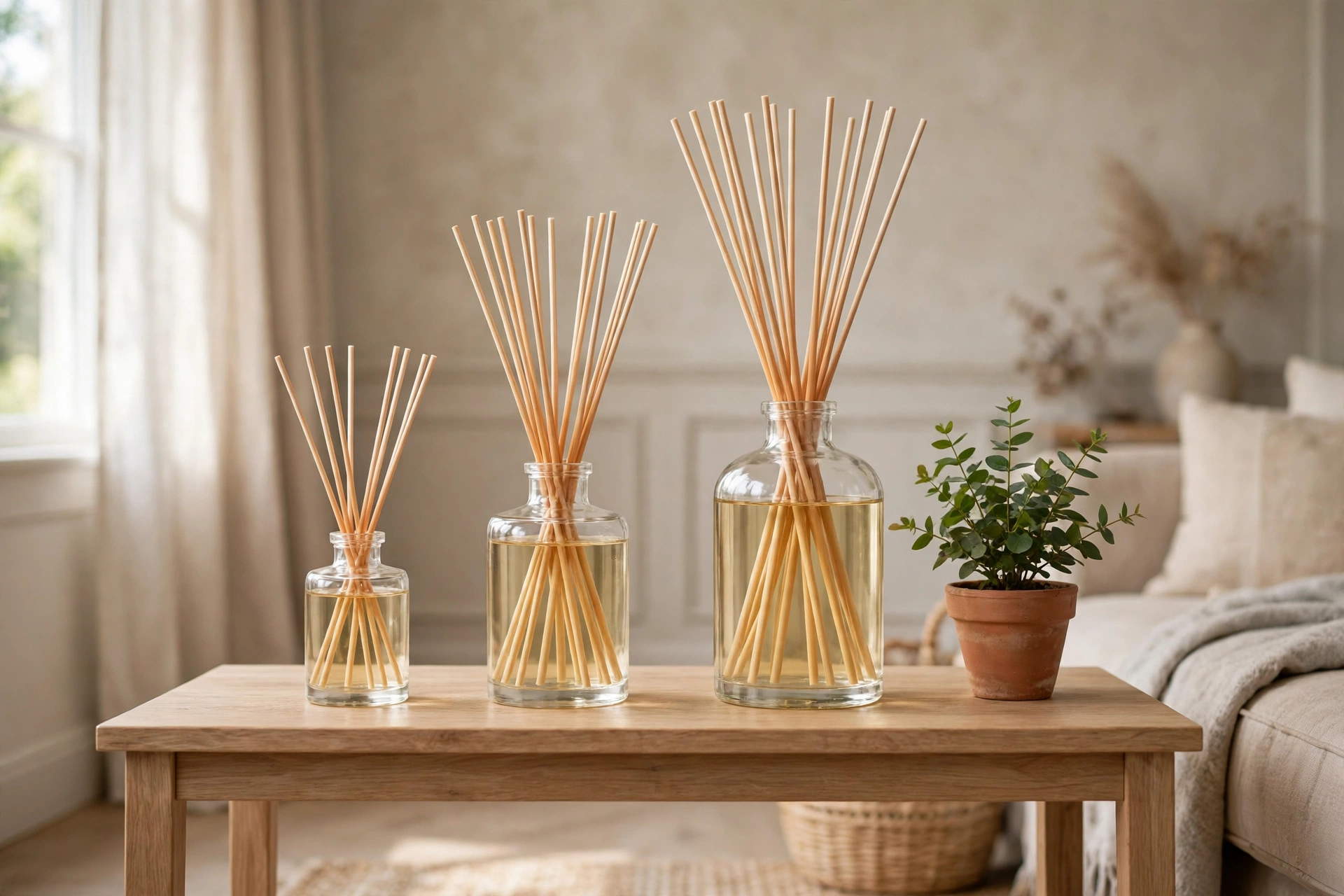
There are three practical answers. The first is to use the candle in a smaller room, where it can do its best work. The second is to burn two candles, or a larger candle, in the big room. The third is to switch format for that room. A reed diffuser scents a room continuously and is often the better tool for a large or open-plan space, because it works all day rather than only while it is lit. Our guide to the best reed diffusers for UK homes and flats sets out which sizes suit which rooms.
One useful test costs nothing. Light the candle in a small room with the door closed, and leave it for an hour. If it smells strong there and weak in the big room, the problem is the room, not the candle. Move it to the smaller room and enjoy it there.
The First Burn and the Care Routine, in Brief
A candle’s whole life is decided by its first burn, and the routine after that is short. This section is the summary. The full routine, with the reasoning behind each step, is in our guide on how to make a scented candle last longer.
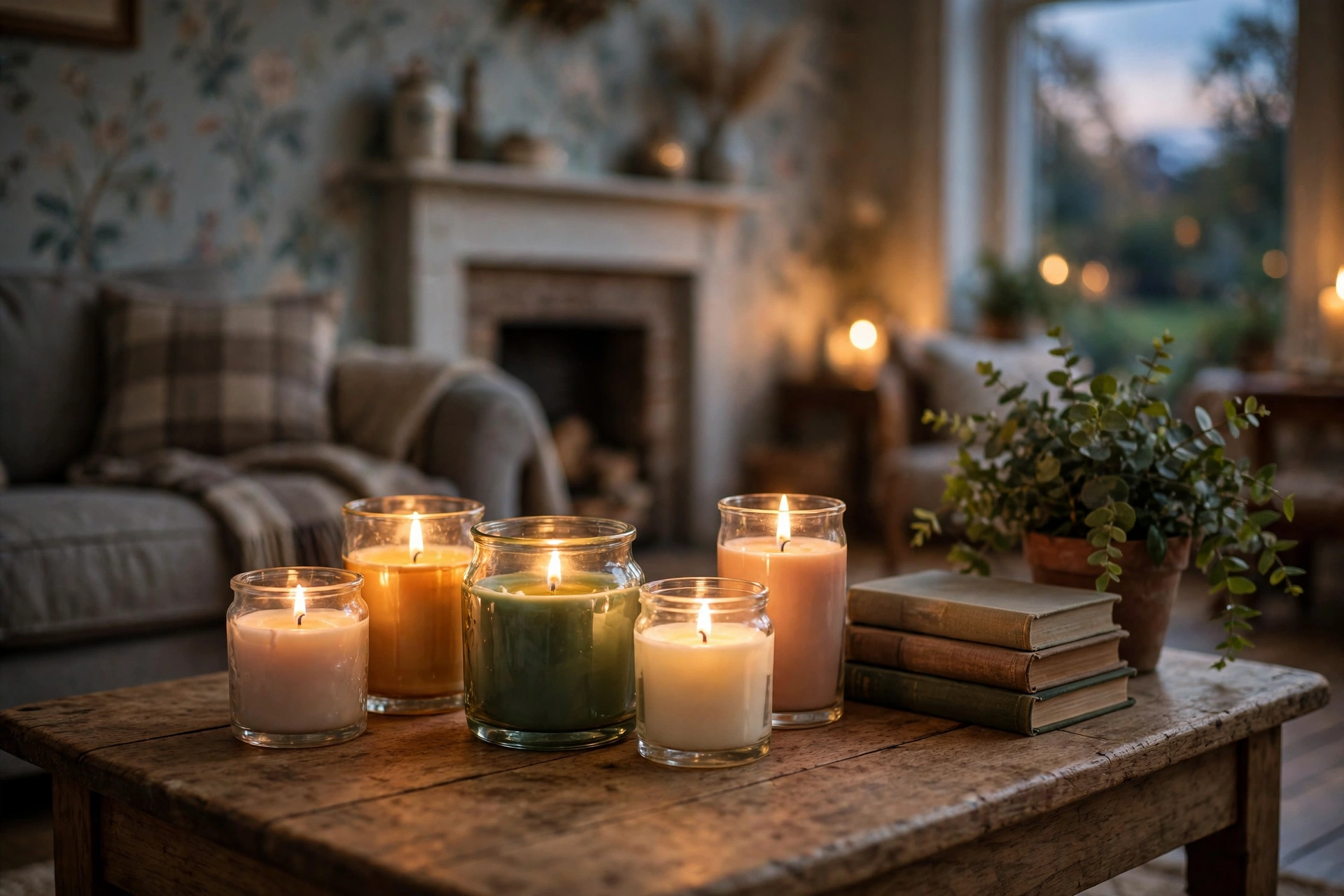
On a new candle, the first burn should melt the whole surface of the wax, right out to the edges of the container. For most candles this takes about two to four hours, and the working rule is roughly one hour for every inch of the candle’s diameter. Until the melt pool reaches the edges, the candle is not throwing at its best, and it may smell faint even though nothing is wrong with it. Short first burns cause tunnelling, where the candle burns a narrow hole down the middle and leaves a ring of unmelted wax at the edges that never joins the melt pool properly again.
After the first burn, the routine is simple. Trim the wick to about 5mm before every burn, so the flame stays short and steady instead of tall and flickering. Keep each burn between one and four hours, and never longer than four. Keep the candle out of draughts, away from windows, doors, fans and radiators, at about waist height on a stable, heatproof surface. Put the lid on between burns, or cover the candle, so dust stays out of the wax and the scent stays in. Stop burning when about a centimetre of wax is left, so the glass never overheats.
How long should a candle last? That depends on the size, the wax and how you burn it, and makers rarely agree on a number. One UK maker, Bougie Hermit, suggests a well-made candle should give at least 40 to 50 hours, but treat that as one maker’s claim, not a universal fact. The honest way to judge value is cost per hour: divide the price by the burn time the maker states, and compare candles that way rather than by jar size alone.
When Things Go Wrong
Most candle problems have a simple cause, and this guide is the hub that points to the fix. If your candle has tunnelled, with a ring of unmelted wax at the edges and a small melt pool in the middle, our guide to candle tunnelling sets out the fix ladder, from a longer burn to the foil tent method, and the prevention routine that stops it happening again. If your candle smells weak even after a proper burn in the right room, our guide on why is my candle not smelling strong works through the causes in order, including cold throw versus hot throw, fragrance load, curing and wax type.
Two other problems are worth a line each here, with full guides of their own to follow. Sooting, the black smoke and black marks on the jar or the wall, is usually a long or mushroomed wick, a draught making the flame flicker, or a session that has run too long. Trim the wick, move the candle into still air, and keep burns under four hours. A candle that smokes, sputters or keeps going out often has too much fragrance in the wax for the wick to cope with, or a wick that does not fit the jar, and that is a maker problem rather than a burning problem, so note the maker and choose differently next time.
Safety: The Rules That Come First
A scented candle is an open flame in your home, and the safety rules are not optional extras. They are the first thing to get right, and they also make for a better burn, because a steady flame in still air throws scent far better than a candle left flickering in a draught while nobody is watching it.
Never leave a burning candle unattended, and never burn one for more than four hours in a single session. Keep it away from curtains, books, bedding and anything else that can catch fire, and keep it out of reach of children and pets. Keep it away from draughts, vents and radiators, not only because draughts steal the scent, but because a flickering flame is an unsafe flame. Put it on a stable, heatproof surface, and never move a lit candle. Put it out before the wax gets down to the last centimetre, and use a snuffer or a lid rather than blowing it out, which sprays hot wax and leaves the wick smoking.
If you have pets, children, or anyone in the home with asthma or allergies, choose the format with care. A flameless option, such as a reed diffuser, is often the safer choice for a bedroom, a nursery or a room where pets sleep, and it scents the room all day without a flame at all. The full safety guidance, separated by animal and by situation, is a guide of its own, and this pillar links to it once it is published.
Storing Scented Candles So They Keep Their Scent
A candle loses scent fastest when it is stored badly, and the storage rules are simple. Keep candles in a cool, dark place, away from direct sunlight and away from radiators. Sunlight and heat melt the surface wax unevenly and let the fragrance evaporate from the surface even when the candle is not lit, so a candle left on a sunny windowsill will smell weaker month by month. Keep the lid on, or cover the candle, between burns. A lid keeps dust out of the wax and keeps the scent in, and it also stops the surface picking up kitchen smells. Store candles upright, so the wax sets evenly, and do not store them in a damp room such as a bathroom, where humidity can affect the wick and the wax.
Do not freeze a candle to make it last longer. The idea is popular online, but freezing can crack the wax and the glass, and it does not extend the burn in any reliable way. A cool cupboard and a lid do the job properly.
If you rotate scents by season, store the out-of-season candles lidded and upright in a cool cupboard, and they will keep their scent for months. A candle that has been stored well will smell as good in autumn as it did when you bought it in spring.
Frequently Asked Questions
How long should I burn a scented candle for?
Between one and four hours per session, and never more than four. The first burn on a new candle should last two to four hours, long enough for the melt pool to reach the edges of the container. Short burns cause tunnelling and weaken the throw.
Why does my candle smell strong in the jar but weak when lit?
That is the gap between cold throw and hot throw. The candle smells strong unlit because the fragrance rises off the solid wax at room temperature. Once lit, the scent depends on the melt pool, the room size, the air movement and the fragrance load inside the candle. Give it a full first burn in a small room with the door closed before you judge it.
How do I make a scented candle smell stronger?
Burn it properly first: a full melt pool, a trimmed wick, still air, the right room size. If it still smells weak, the cause is inside the candle, usually a low fragrance load or the wrong wax for the job, and no burning trick will fix it. Choose a larger candle, a stronger-throwing wax such as paraffin, or a different format such as a reed diffuser for that room.
Which wax is best for scented candles?
There is no single best wax. Paraffin throws the strongest scent. Soy burns the cleanest and slowest. Beeswax is the most natural and the most expensive. Blends give you a clean burn with a better throw than pure soy. Choose by what matters most to you, and use the comparison table above.
Are scented candles safe around pets?
No candle is risk free, and pets need care. Dogs, cats and birds react differently, and birds are the most sensitive of all. Never leave a candle burning in a room a pet cannot leave, keep candles out of reach, keep the room ventilated, and consider a flameless format for pet rooms. Full guidance by animal is a separate guide.
How do I stop a candle from tunnelling?
Give every new candle a full first burn, with the melt pool reaching the edges, and keep later burns between one and four hours. If a candle has already tunnelled, the fix ladder is in our guide to candle tunnelling.
Can I reuse the jar when the candle is finished?
Yes, once the wax is down to the last centimetre and the candle has cooled. Warm the jar gently to soften the remaining wax, wipe it out, wash it with hot soapy water, and it makes a useful storage jar or a small vase. Never pour wax down a drain.
Where to Go Next
This guide is the hub. The cluster pages around it carry the depth. For the daily care routine, read how to make a scented candle last longer. For tunnelling, read candle tunnelling: causes and fixes. For a weak throw, read why is my candle not smelling strong. For the flameless alternative, read the best reed diffusers for UK homes and flats. The wax comparison, the room-by-room scent guides and the safety guide follow as their own pages, and this pillar will link to them as they are published.